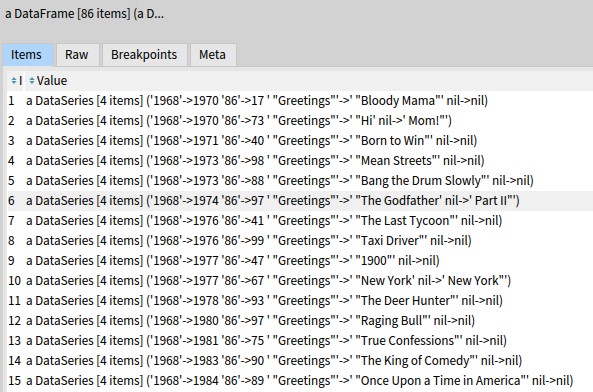
Hi Konrad Thanks for pointing this out. You are right with how the data types are calculated, similar to collection >> commonSuperClass. But this time, it is calculated only during the creation of DataFrame once and for all. Now coming to the next part, Kindly have a look at the below code. ------------------------------ series := #( nil nil nil ) asDataSeries. series calculateDataType. "UndefinedObject" . A nil value, or a Series of nil values yields UndefinedObject as its super class. There was an error with the dataset used on that example blog post. I have corrected it now. The problem was that the dataset was not clean, and had some garbage values of different types in that column. This resulted in a column, with type Object . This was the dataset and specifically the last column resulted in this mistake. On Sat, Aug 7, 2021 at 9:58 PM Konrad Hinsen <konrad.hinsen@fastmail.net> wrote:
Hi Balaji,
Please go through the following blog post. Any kind of suggestion or feedback is welcome.
That's a nice description, easy to follow. But there is a missing piece: how do you actually find the dataType for a series of values? My first guess was that you are using the same method as Collection >> commonSuperclass, but then a nil value should yield UndefinedObject, not Object as in your example.
Cheers Konrad.