Things that are not code, but are relevant either before or after the loading of a package.
Maybe you do not need a specific part for such information because I think (hope) most packages will not require such kind of information.
Indeed I think we don't need a separate place to put this, because it's pretty rare.
Dolphin has this problem solved in a nice way (I don't know how other Smalltalks solve it)
Could you describe me how Dolphin does and/or if you have some screenshots?
Sure, see below.
So, to clear thing up, what are you saying?
2 - Make more methods for other metadata such as [...]
you may concatenate this information into the package comment for the display part even if not yet editable.
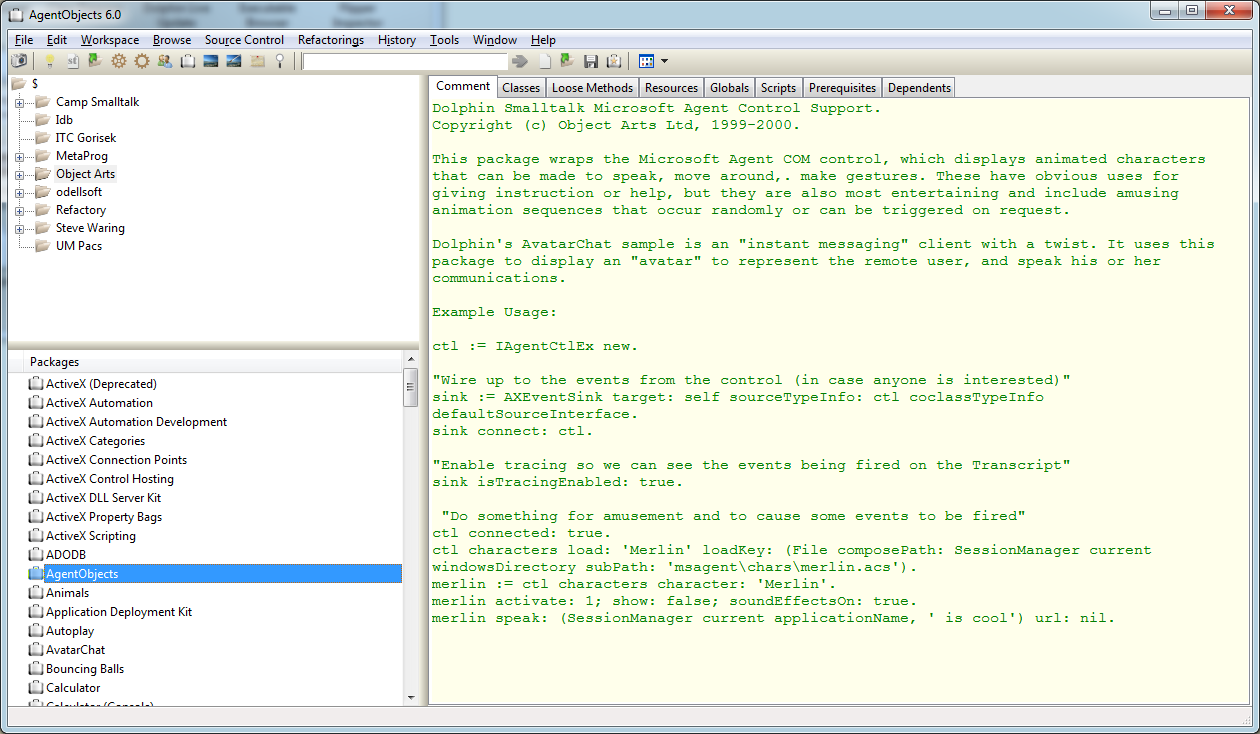
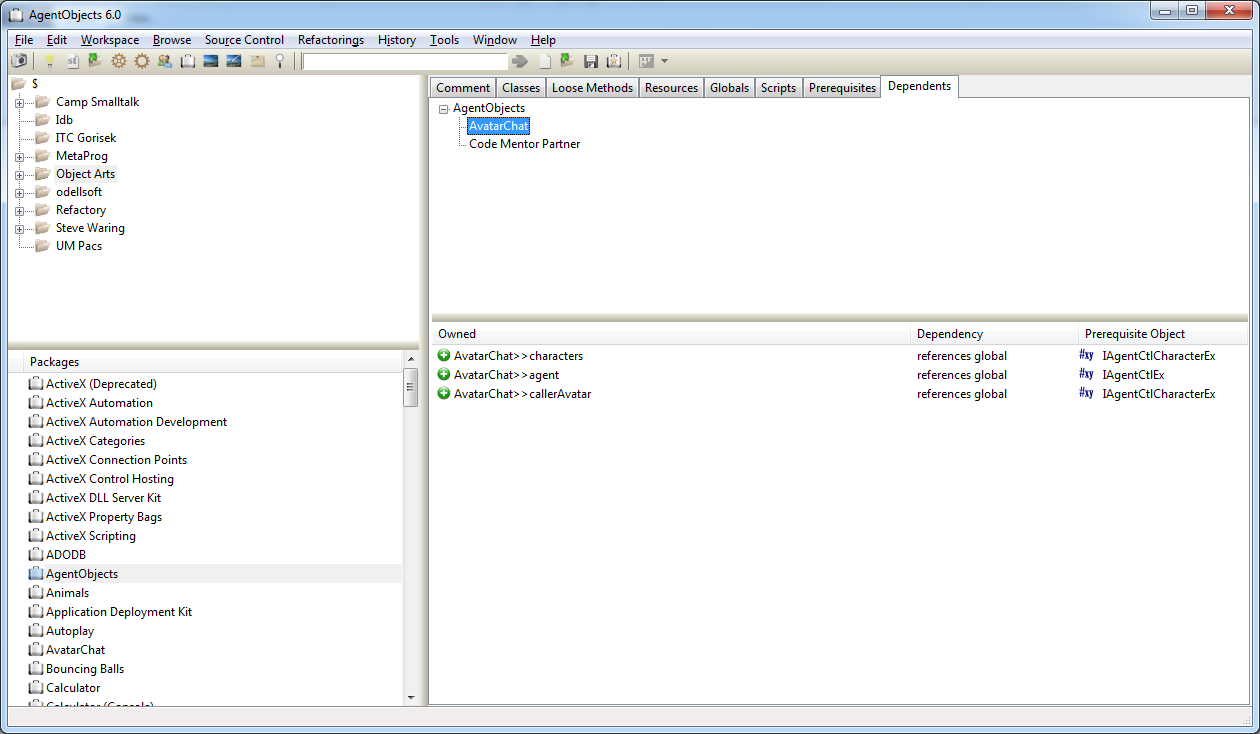
Cristal clear. In this case, then the comment functionality we are adding should be followed with more work, adding more metadata in the Manifests (or refactoring Manifests) â Top left pane: File system tree where packages are located Down left pane: Packages in the file system location selected above Tabs: *Comment *- Whatever text you put *Classes *- Classes defined by the package *Loose method*s - Methods in classes added by the package that are not in classes defined by the package *Resources *- Objects embedded in the package (that is, serialized instances) Mainly used for window views. *Globals *- Entries in the system dictionary that are defined by the package *Scripts *- This tab has four subtabs: preinstall, postinstall, preuninstall, postuninstall These scripts where ran in the appropriate stage of installing/uninstalling the package *Prerequisites *- Depending on the classes, globals, etc, referenced by the classes and methods,etc from the package, the browser determined it's dependencies and this information would be then saved in the package itself. If the package had circular dependencies, then it wouldn't allow you to save it. The prerequisites listed you the packages which yoyr package depended on and why. That is, a list of which method referenced something outside the package. *Dependents *- As prerequisites, but shows the packages that depend on your package, and why Example of Dependents: â The second dependency is created because the method references a class: agent "Answers the IAgentCtl for the receiver's avatars" agent isNull ifTrue: [ agent := *IAgentCtlEx* new. agent connected: true ]. ^agent