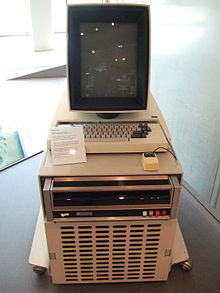
Yes this is an interesting comparison, in particular if you add size and weight to the comparison. Thank you Marcus, for the idea of doing the comparison putting the figures together. And yes, 1000 times more RAM should make it possible to come up with a more easy to understand design for the object memory and VM. --Hannes On 5/10/12, Marcus Denker <marcus.denker@inria.fr> wrote:
On May 10, 2012, at 1:34 PM, H. Hirzel wrote:
On 5/10/12, Pavel Krivanek <pavel.krivanek@gmail.com> wrote:
Hi,
one my friend got Raspberry Pi yesterday so I have seen it in action. I had almost no time for experiments but I have seen Fedora 17 on it with standard Squeak (3.10) packages for this distro on FullHD display. On that VM (3.10.5) I got about 40M bytecodes/sec and 1M sends/sec. The environment is not extra fast but usable without problems. I will pray for successful GSoC ARM JIT project :-) The device was connected to the professional meter and the power consumption was about 3.5W.
Cheers, -- Pavel
Amazing, a 256MB RAM machine with a main board which includes everything for 35USD. Some five to seven years ago one would not have believed that this is possible.
This especially *screams* for re-considering certain design decisions that we inherited from Smalltalk.
256MB of RAM makes it hard to argue for complex schmemes to save some a little ram. (Compact classes, for example).
How would smalltalk look like if it would be re-designed with the same philosophy that they used when there where just 256Kb in the Alto?
This is a fun comparision:
http://www.raspberrypi.org/ vs http://en.wikipedia.org/wiki/Xerox_Alto
1) Price.
$35 vs. $35000 (est, not adjusted for inflation). x1000
2) RAM
256MB vs. 256Kb (max was 512, at the end). x1000
3) CPU
1MIPS? not sure. Vs. 700Mhz ARMv11 x 1000 (?) + 3D and MP4 decoder
So one could argue that it's a factor of 1 Million considering price and Performance together...
Marcus
-- Marcus Denker -- http://marcusdenker.de