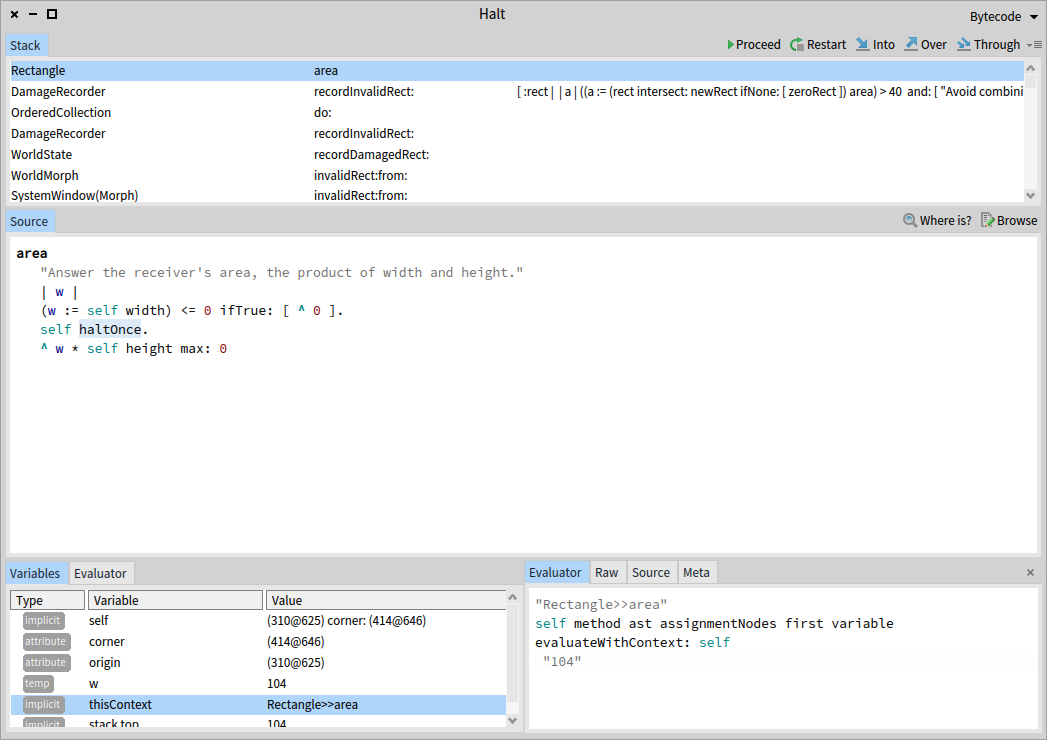
Hi, This is fun experiment: Every RBValueNode subclass evaluates to something. So why not implement a #evaluate method? This is especially fun to do for a specific context, as this means that you could evaluate every RBVariableNode to see the value. So lets implement a method in RBValueNode: evaluateWithContext: aContext | methodNode | If we want to compile a method for it, we need to wrap it into a return and a method. Like when evaluating in the debugger, we create a #DoItIn: method that will get the context as a parameter to read the values from (temps from the context, ivars from context receiver). This works like this: methodNode := RBMethodNode selector: #DoItIn: arguments: { RBVariableNode named: 'ThisContext' } body: (RBReturnNode value: self) asSequenceNode. to read temps from the context parameter, we use the rewrite method that is used by doits already: methodNode rewriteTempsForContext: aContext. and now we can execute: ^methodNode generate valueWithReceiver: aContext receiver arguments: {aContext}. For testing, I put a #haltOnce into Rectangle>>#area and then use the inspector on the context to evaluate a AST node that is a temporary variable. The screenshot shows executing self method ast assignmentNodes first variable evaluateWithContext: self and it returns correctly 104: Of course there are simpler ways to read variables by name from a context (e.g. we added #lookupSymbol: ), but #evaluateWithContext: can be called on other Nodes, too. E.g. just a #evaluate could be nice for creating Blocks programmatically (instead of calling the compiler on a Pretty-Print result like #createBlockFor: in the ParseTreeSearcher). A version that does not take context and receiver into account is this: evaluate | methodNode | methodNode := RBMethodNode selector: #DoIt body: (RBReturnNode value: self) asSequenceNode. ^methodNode generate valueWithReceiver: nil arguments: #(). and then you can do things like blockNode: = RBBlockNode body: (RBLiteralNode value: 5) asSequenceNode blockNode evaluate to create blocks. Marcus