Iterating over a Dictionary

I need to iterate over a dictionary. I asked the AI buddy for a little help, and he says: | myDictionary | "Create a dictionary" myDictionary := Dictionary new. myDictionary at: 'one' put: 1. myDictionary at: 'two' put: 2. myDictionary at: 'three' put: 3. "Iterate over the dictionary" myDictionary do: [ :key :value | Transcript show: key , ' -> ', value printString ; nl. ]. but when i try this, I get: ArgumentsCountMismatch: This block accepts 2 arguments, but was called with 1 argument. Is the AI using a different dialect of smalltalk? how would I go about acting on each pair? Thanks! ---- peace, sergio photographer, journalist, visionary Public Key: https://pgp.key-server.io/pks/lookup?op=get&search=0x69B08F58923AB3A2 #BitMessage BM-NBaswViL21xqgg9STRJjaJaUoyiNe2dV @sergio_101@mastodon.social https://sergio101.com http://www.codeandmusic.com http://www.twitter.com/sergio_101 http://www.facebook.com/sergio101

AI knows little about Smalltalk ;-) You can use do: with each Association as a parameter or you can use keysAndValuesDo: myDic do: [:assoc| | key value| key := assoc key. value := assoc value. ...]. myDic keysAndValuesDo: [:key :value| ...] Joachim Am 23.01.24 um 17:24 schrieb sergio ruiz:
I need to iterate over a dictionary.
I asked the AI buddy for a little help, and he says:
| myDictionary |
"Create a dictionary" myDictionary := Dictionary new. myDictionary at: 'one' put: 1. myDictionary at: 'two' put: 2. myDictionary at: 'three' put: 3.
"Iterate over the dictionary" myDictionary do: [ :key :value | Â Â Transcript show: key , ' -> ', value printString ; nl. ].
but when i try this, I get:
ArgumentsCountMismatch: This block accepts 2 arguments, but was called with 1 argument.
Is the AI using a different dialect of smalltalk?
how would I go about acting on each pair?
Thanks!
---- peace, sergio photographer, journalist, visionary
Public Key: https://pgp.key-server.io/pks/lookup?op=get&search=0x69B08F58923AB3A2 #BitMessage BM-NBaswViL21xqgg9STRJjaJaUoyiNe2dV @sergio_101@mastodon.social https://sergio101.com http://www.codeandmusic.com http://www.twitter.com/sergio_101 http://www.facebook.com/sergio101
-- ----------------------------------------------------------------------- Objektfabrik Joachim Tuchelmailto:jtuchel@objektfabrik.de Fliederweg 1http://www.objektfabrik.de D-71640 Ludwigsburghttp://joachimtuchel.wordpress.com Telefon: +49 7141 56 10 86 0 Fax: +49 7141 56 10 86 1

myDict associationsDo: [: anAssociation | ]. myDict keysDo: [:aKey | ]. myDict valuesDo: [:aValue | ]. myDict do: [:aValue | ]. âAn alias for #valuesDo:â James Foster
On Jan 23, 2024, at 8:27â¯AM, Joachim Tuchel <jtuchel@objektfabrik.de> wrote:
AI knows little about Smalltalk ;-)
You can use do: with each Association as a parameter or you can use keysAndValuesDo:
myDic do: [:assoc| | key value| key := assoc key. value := assoc value. ...]. myDic keysAndValuesDo: [:key :value| ...]
Joachim
Am 23.01.24 um 17:24 schrieb sergio ruiz:
I need to iterate over a dictionary.
I asked the AI buddy for a little help, and he says:
| myDictionary |
"Create a dictionary" myDictionary := Dictionary new. myDictionary at: 'one' put: 1. myDictionary at: 'two' put: 2. myDictionary at: 'three' put: 3.
"Iterate over the dictionary" myDictionary do: [ :key :value | Transcript show: key , ' -> ', value printString ; nl. ].
but when i try this, I get:
ArgumentsCountMismatch: This block accepts 2 arguments, but was called with 1 argument.
Is the AI using a different dialect of smalltalk?
how would I go about acting on each pair?
Thanks!
---- peace, sergio photographer, journalist, visionary
Public Key: https://pgp.key-server.io/pks/lookup?op=get&search=0x69B08F58923AB3A2 #BitMessage BM-NBaswViL21xqgg9STRJjaJaUoyiNe2dV @sergio_101@mastodon.social https://sergio101.com <https://sergio101.com/> http://www.codeandmusic.com <http://www.codeandmusic.com/> http://www.twitter.com/sergio_101 http://www.facebook.com/sergio101
--
----------------------------------------------------------------------- Objektfabrik Joachim Tuchel mailto:jtuchel@objektfabrik.de Fliederweg 1 http://www.objektfabrik.de <http://www.objektfabrik.de/> D-71640 Ludwigsburg http://joachimtuchel.wordpress.com <http://joachimtuchel.wordpress.com/> Telefon: +49 7141 56 10 86 0 Fax: +49 7141 56 10 86 1

This has not changed since Smalltalk-80. Running Smalltalk-80 and looking in the browser, I see Dictionary>> do: aBlock super do: [:assoc | aBlock value: assoc value]. 'super' here is Set, a Dictionary being implemented as a Set of Associations (which was always a bad idea). Dictionary>>do: has ALWAYS iterated over the elements of a dictionary, NOT the associatons. I have Squeak, Pharo, Smalltalk-80, VisuaWorks, VisualAe, Smalltalk/X, and GNU Smalltalk (plus several others including my own). They all follow the ANSI standard in this respect., The distinction between #do: and #associationsDo: goes back to Smalltalk-80, as does #keysDo:. On Wed, 24 Jan 2024 at 05:33, Joachim Tuchel <jtuchel@objektfabrik.de> wrote:
So there we already have dialect differences â¦
Am 23.01.2024 um 17:32 schrieb James Foster via Pharo-users <pharo-users@lists.pharo.org>:
myDict associationsDo: [: anAssociation | ]. myDict keysDo: [:aKey | ]. myDict valuesDo: [:aValue | ]. myDict do: [:aValue | ]. âAn alias for #valuesDo:â
James Foster
On Jan 23, 2024, at 8:27â¯AM, Joachim Tuchel <jtuchel@objektfabrik.de> wrote:
AI knows little about Smalltalk ;-)
You can use do: with each Association as a parameter or you can use keysAndValuesDo:
myDic do: [:assoc| | key value| key := assoc key. value := assoc value. ...].
myDic keysAndValuesDo: [:key :value| ...]
Joachim
Am 23.01.24 um 17:24 schrieb sergio ruiz:
I need to iterate over a dictionary.
I asked the AI buddy for a little help, and he says:
| myDictionary |
"Create a dictionary" myDictionary := Dictionary new. myDictionary at: 'one' put: 1. myDictionary at: 'two' put: 2. myDictionary at: 'three' put: 3.
"Iterate over the dictionary" myDictionary do: [ :key :value | Transcript show: key , ' -> ', value printString ; nl. ].
but when i try this, I get:
ArgumentsCountMismatch: This block accepts 2 arguments, but was called with 1 argument.
Is the AI using a different dialect of smalltalk?
how would I go about acting on each pair?
Thanks!
---- peace, sergio photographer, journalist, visionary
Public Key: https://pgp.key-server.io/pks/lookup?op=get&search=0x69B08F58923AB3A2 #BitMessage BM-NBaswViL21xqgg9STRJjaJaUoyiNe2dV @sergio_101@mastodon.social https://sergio101.com http://www.codeandmusic.com http://www.twitter.com/sergio_101 http://www.facebook.com/sergio101
--
----------------------------------------------------------------------- Objektfabrik Joachim Tuchel mailto:jtuchel@objektfabrik.de Fliederweg 1 http://www.objektfabrik.de D-71640 Ludwigsburg http://joachimtuchel.wordpress.com Telefon: +49 7141 56 10 86 0 Fax: +49 7141 56 10 86 1
James is of course right. do: iterates over the values, if you want the whole associations, you use associationsDo: At least I was right about keysAndValuesDo: ;-) Joachim
myDict do: [:aValue | ]. âAn alias for #valuesDo:â
James Foster
On Jan 23, 2024, at 8:27â¯AM, Joachim Tuchel <jtuchel@objektfabrik.de> wrote:
AI knows little about Smalltalk ;-)
You can use do: with each Association as a parameter or you can use keysAndValuesDo:
myDic do: [:assoc| | key value| key := assoc key. value := assoc value. ...]. myDic keysAndValuesDo: [:key :value| ...]
Joachim
Am 23.01.24 um 17:24 schrieb sergio ruiz:
I need to iterate over a dictionary.
I asked the AI buddy for a little help, and he says:
| myDictionary |
"Create a dictionary" myDictionary := Dictionary new. myDictionary at: 'one' put: 1. myDictionary at: 'two' put: 2. myDictionary at: 'three' put: 3.
"Iterate over the dictionary" myDictionary do: [ :key :value | Â Â Transcript show: key , ' -> ', value printString ; nl. ].
but when i try this, I get:
ArgumentsCountMismatch: This block accepts 2 arguments, but was called with 1 argument.
Is the AI using a different dialect of smalltalk?
how would I go about acting on each pair?
Thanks!
---- peace, sergio photographer, journalist, visionary
Public Key: https://pgp.key-server.io/pks/lookup?op=get&search=0x69B08F58923AB3A2 #BitMessage BM-NBaswViL21xqgg9STRJjaJaUoyiNe2dV @sergio_101@mastodon.social https://sergio101.com http://www.codeandmusic.com http://www.twitter.com/sergio_101 http://www.facebook.com/sergio101
--
----------------------------------------------------------------------- Objektfabrik Joachim Tuchelmailto:jtuchel@objektfabrik.de Fliederweg 1http://www.objektfabrik.de D-71640 Ludwigsburghttp://joachimtuchel.wordpress.com Telefon: +49 7141 56 10 86 0 Fax: +49 7141 56 10 86 1
-- ----------------------------------------------------------------------- Objektfabrik Joachim Tuchelmailto:jtuchel@objektfabrik.de Fliederweg 1http://www.objektfabrik.de D-71640 Ludwigsburghttp://joachimtuchel.wordpress.com Telefon: +49 7141 56 10 86 0 Fax: +49 7141 56 10 86 1
oh! this makes sense.. let me try this. The trick is, i have used the AI system from JetBrains (in my day job IDE).. and it has figured out a bunch of smalltalk questions i had. Even questions about the pharo ecosystem. It hasnât always been 100%, but it got me to look in the right place quickly. This was the first time it came up with something that looked right (i have seen this pattern everywhere).. but it was not correct.. Thanks!
On Jan 23, 2024, at 11:27â¯AM, Joachim Tuchel <jtuchel@objektfabrik.de> wrote:
AI knows little about Smalltalk ;-)
---- peace, sergio photographer, journalist, visionary Public Key: https://pgp.key-server.io/pks/lookup?op=get&search=0x69B08F58923AB3A2 #BitMessage BM-NBaswViL21xqgg9STRJjaJaUoyiNe2dV @sergio_101@mastodon.social https://sergio101.com http://www.codeandmusic.com http://www.twitter.com/sergio_101 http://www.facebook.com/sergio101

In the dialects I am familiar with, James' answer is correct. Some dialects implement #keysAndValuesDo: on sequenceable collections, in which case, the keys are the indexes of the values. On Tue, Jan 23, 2024, 12:05 sergio ruiz <sergio.rrd@gmail.com> wrote:
oh! this makes sense..
let me try this.
The trick is, i have used the AI system from JetBrains (in my day job IDE).. and it has figured out a bunch of smalltalk questions i had. Even questions about the pharo ecosystem.
It hasnât always been 100%, but it got me to look in the right place quickly.
This was the first time it came up with something that looked right (i have seen this pattern everywhere).. but it was not correct..
Thanks!
On Jan 23, 2024, at 11:27â¯AM, Joachim Tuchel <jtuchel@objektfabrik.de> wrote:
AI knows little about Smalltalk ;-)
---- peace, sergio photographer, journalist, visionary
Public Key: https://pgp.key-server.io/pks/lookup?op=get&search=0x69B08F58923AB3A2 #BitMessage BM-NBaswViL21xqgg9STRJjaJaUoyiNe2dV @sergio_101@mastodon.social https://sergio101.com http://www.codeandmusic.com http://www.twitter.com/sergio_101 http://www.facebook.com/sergio101

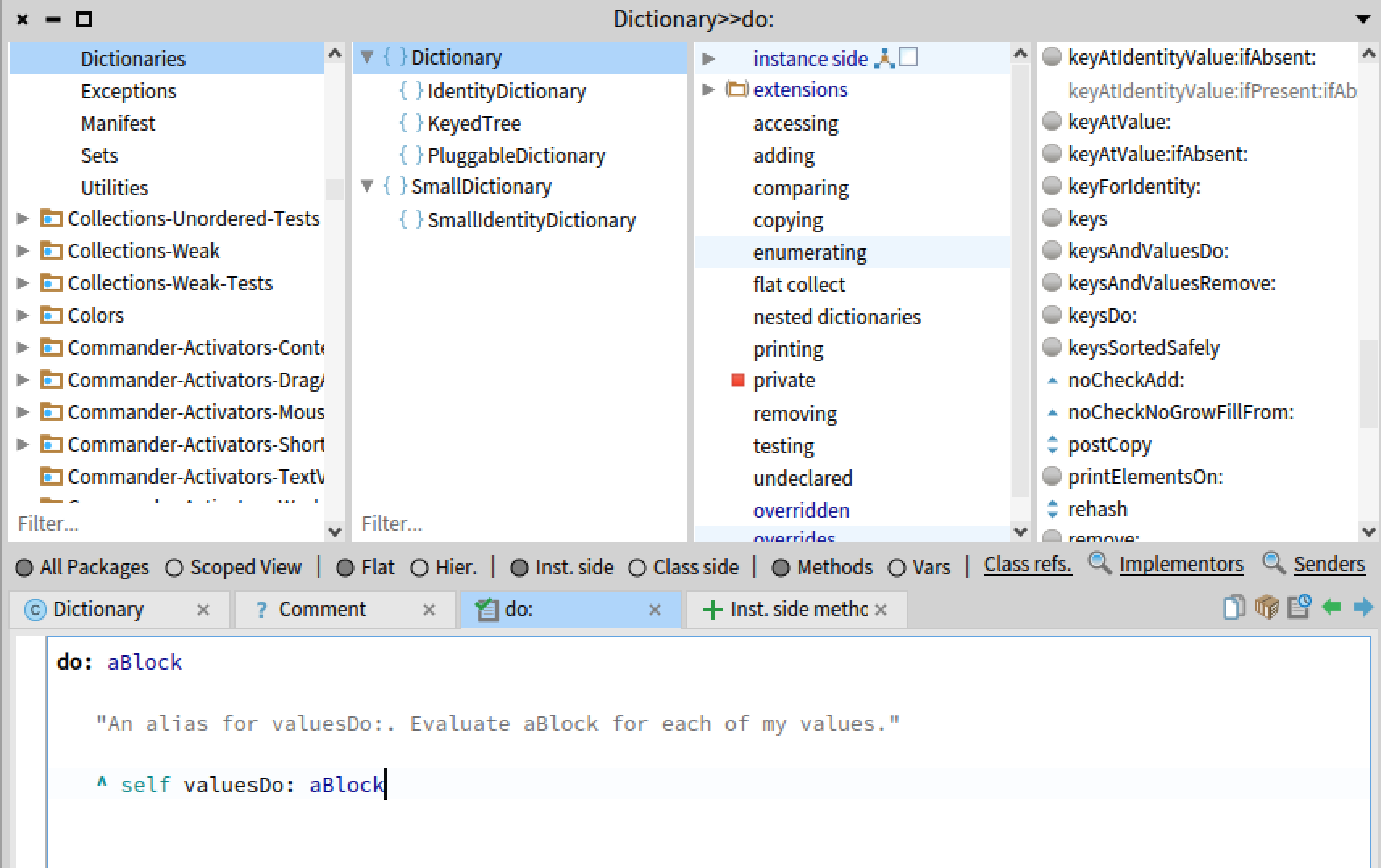
Hi Sergio, Keep in mind, you have the source code to everything. So you can just browse Dictionary and when you find #do: it says right in the code what it does. 
On Jan 23, 2024, at 10:04â¯AM, sergio ruiz <sergio.rrd@gmail.com> wrote:
oh! this makes sense..
let me try this.
The trick is, i have used the AI system from JetBrains (in my day job IDE).. and it has figured out a bunch of smalltalk questions i had. Even questions about the pharo ecosystem.
It hasnât always been 100%, but it got me to look in the right place quickly.
This was the first time it came up with something that looked right (i have seen this pattern everywhere).. but it was not correct..
Thanks!
On Jan 23, 2024, at 11:27â¯AM, Joachim Tuchel <jtuchel@objektfabrik.de> wrote:
AI knows little about Smalltalk ;-)
---- peace, sergio photographer, journalist, visionary
Public Key: https://pgp.key-server.io/pks/lookup?op=get&search=0x69B08F58923AB3A2 #BitMessage BM-NBaswViL21xqgg9STRJjaJaUoyiNe2dV @sergio_101@mastodon.social https://sergio101.com http://www.codeandmusic.com http://www.twitter.com/sergio_101 http://www.facebook.com/sergio101
Wrong. If you want to iterate of the associations of a dictionary, you need #associationsDo:. #do: passes the *values* to the block, *NOT* the associations. On Wed, 24 Jan 2024 at 05:28, Joachim Tuchel <jtuchel@objektfabrik.de> wrote:
AI knows little about Smalltalk ;-)
You can use do: with each Association as a parameter or you can use keysAndValuesDo:
myDic do: [:assoc| | key value| key := assoc key. value := assoc value. ...].
myDic keysAndValuesDo: [:key :value| ...]
Joachim
Am 23.01.24 um 17:24 schrieb sergio ruiz:
I need to iterate over a dictionary.
I asked the AI buddy for a little help, and he says:
| myDictionary |
"Create a dictionary" myDictionary := Dictionary new. myDictionary at: 'one' put: 1. myDictionary at: 'two' put: 2. myDictionary at: 'three' put: 3.
"Iterate over the dictionary" myDictionary do: [ :key :value | Transcript show: key , ' -> ', value printString ; nl. ].
but when i try this, I get:
ArgumentsCountMismatch: This block accepts 2 arguments, but was called with 1 argument.
Is the AI using a different dialect of smalltalk?
how would I go about acting on each pair?
Thanks!
---- peace, sergio photographer, journalist, visionary
Public Key: https://pgp.key-server.io/pks/lookup?op=get&search=0x69B08F58923AB3A2 #BitMessage BM-NBaswViL21xqgg9STRJjaJaUoyiNe2dV @sergio_101@mastodon.social https://sergio101.com http://www.codeandmusic.com http://www.twitter.com/sergio_101 http://www.facebook.com/sergio101
--
----------------------------------------------------------------------- Objektfabrik Joachim Tuchel mailto:jtuchel@objektfabrik.de Fliederweg 1 http://www.objektfabrik.de D-71640 Ludwigsburg http://joachimtuchel.wordpress.com Telefon: +49 7141 56 10 86 0 Fax: +49 7141 56 10 86 1
There are many books about Smalltalk. Stephane Ducasse has made many of them available as FREE pdfs. Of course Pharo by Example would be a good start. The latest edition of Pharo by Example I have ready to hand is 8.0, 2020, where what you want is chapter 13, Collections. aCollection do: [:element | ...] aKeyedCollection keysAndValuesDo: [:key :element | ...] dictionaries are keyed and so are sequences. You can iterate over the elements of any collection using #do: with a one-argument block. The elements will be passed to the block and the keys will NOT. If you want the keys, must use #keysAndValuesDo: with a two-argument block. The keys and corresponding elements will be passed to the block. You "AI buddy" is a treacherous lying ignorant bastard. Such is the start of AI. 1. Open a browser on Dictionary. 2. Select "enumerating" the the method category panel (top row, third from left). 3. In the method panel (top row, rightmost) you will see do: keysAndValuesDo: keysDo: valuesDo: 4. Selecting them one at a time you will see do: aBlock ^self valuesDo: aBlock keysAndValuesDo: aBlock ^self associationsDo: [:assoc | aBlock value: assoc key value: assoc value] keysDo: aBlock ^self associationsDo:: [:association | aBlock value: associatoin key] valuesDo: aBlock tally = 0 ifTrue: [^self]. 1 to: array size do: [:eachIndex | |eachAssociation| eachAssociation := array at: eachIndex. nil == eachAssociation ifFalse: [ aBlock value: eachAssociation value]]. Now to fully make sense of this, you'd have to understand how a Dictionary is implemented in Pharo. (An Array whose elements are reach either nil or an Association holding a key and a value. This is a traditional Smalltalk implementation of dictionaries, but others except and some are better.) But you CAN see quite easily from this code that #do:, #keysDo:, and #valuesDo: pass just one value to their block argument, while #keysAndValuesDo: passes TWO values. And this is typicalk of trying to glean understanding by looking at the system source code: it is easy, you won't undersand everything, but you'll learn *something*. On Wed, 24 Jan 2024 at 05:24, sergio ruiz <sergio.rrd@gmail.com> wrote:
I need to iterate over a dictionary.
I asked the AI buddy for a little help, and he says:
| myDictionary |
"Create a dictionary" myDictionary := Dictionary new. myDictionary at: 'one' put: 1. myDictionary at: 'two' put: 2. myDictionary at: 'three' put: 3.
"Iterate over the dictionary" myDictionary do: [ :key :value | Transcript show: key , ' -> ', value printString ; nl. ].
but when i try this, I get:
ArgumentsCountMismatch: This block accepts 2 arguments, but was called with 1 argument.
Is the AI using a different dialect of smalltalk?
how would I go about acting on each pair?
Thanks!
---- peace, sergio photographer, journalist, visionary
Public Key: https://pgp.key-server.io/pks/lookup?op=get&search=0x69B08F58923AB3A2 #BitMessage BM-NBaswViL21xqgg9STRJjaJaUoyiNe2dV @sergio_101@mastodon.social https://sergio101.com http://www.codeandmusic.com http://www.twitter.com/sergio_101 http://www.facebook.com/sergio101
participants (6)
-
 James Foster
 -
 Joachim Tuchel
 -
 Richard O'Keefe
 -
 Richard Sargent
 -
 sergio ruiz
 -
 Todd Blanchard