
Hi all. I'm enjoying reading some books of the Platform Studies series by the MIT Press (https://mitpress.mit.edu/books/series/platform-studies). Specifically, I'm reading "The future was here" about the Amiga and "Racing the Beam" about the Atari VCS. What I like about these books is how they try to study the relationships between the hardware and software design of these computing platforms and the creative works produced on these systems. The books study these media from the technical point of view, but also deep into their social and cultural aspects. I'd like this kind of critical study about the Smalltalk platform. Do you know about any book or research in this style? Thank you. ~ Rafael Luque

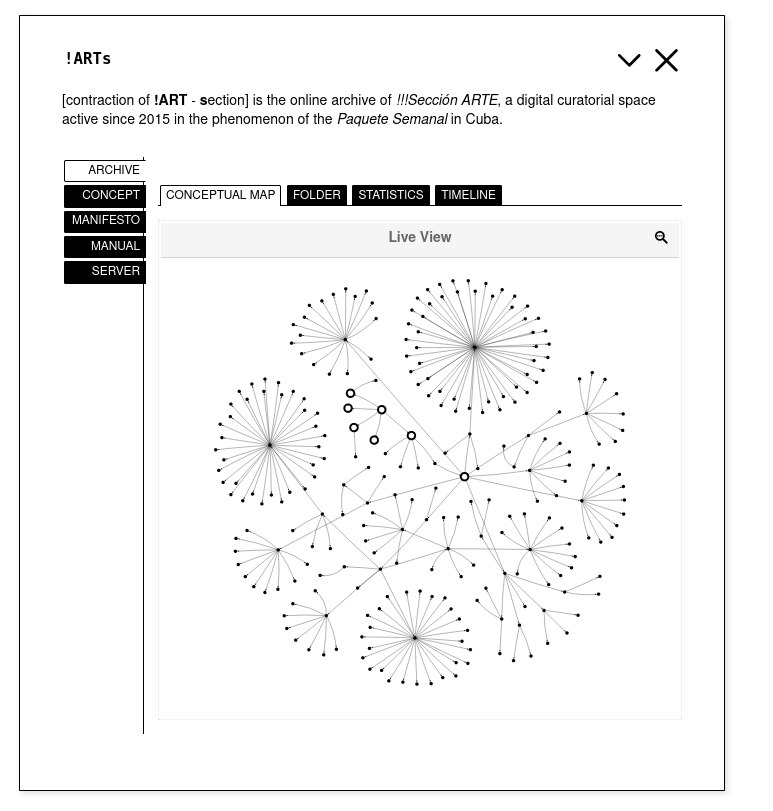
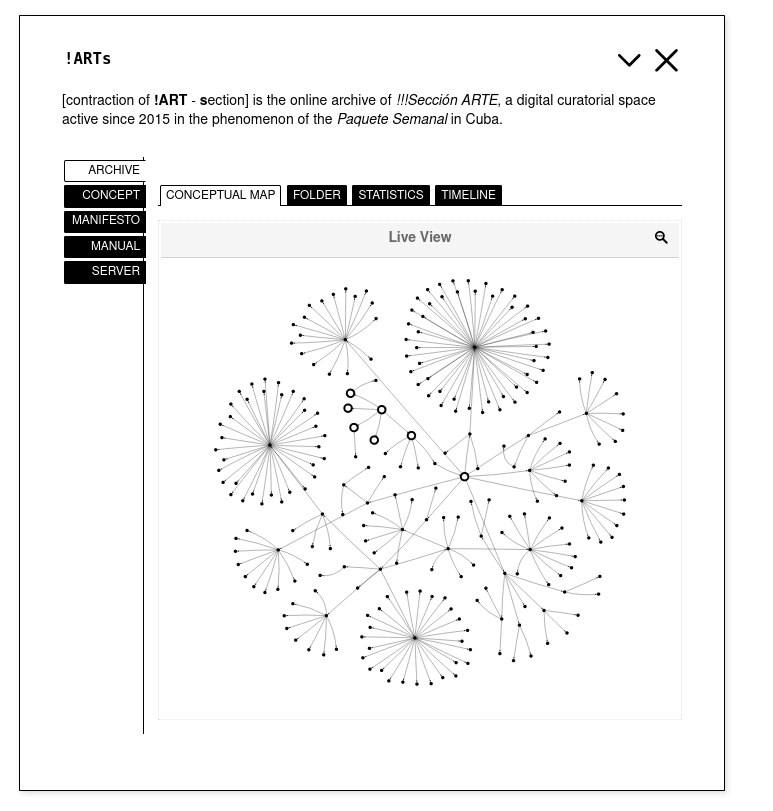
Hi Rafael, Thanks for those provocative reading recommendations. On the use of Smalltalk or its derivations from a more sociotechnical point of view I would recommend Maxwell's Tracing the Dynabook, a study of technocultural transformations [1]: [1] https://mutabit.com/repos.fossil/indieweb/uv/docs/es/miniwiki/grafoscopedia.... Also on alternative tech stacks as a way to inhabit alternative futures, recently I was presenting The Weekly Package (think in a Cuban Hulu/Netflix alike of 1 terabyte of data of media working offline across all the island) and how we mapped it by combining it with Pharo/GT, TiddlyWiki and Fossil: """ Because infrastructures organize/accumulate action and embed/transport contexts, by choosing alternative tech stacks, we are enabling ourselves to inhabit/explore alternative futures. ie by choosing techs like TiddlyWiki instead of MediaWiki, Fossil instead of Git, Pharo instead of Python, HedgeDoc instead of GooglDocs, and so on, and by arranging such technologies on our own stacks and workflows, we are answering ourselves, via prototyping, about alternatives to questions like: * How to organize and empower community learning and memory, particularly in places with intermittent/low connectivity and diverse (mostly small to medium) computing/storage/processing resources? * How to inhabit the continuum between online/offline, inter+personal/collective, synchronous/asynchronous, documents/data/software? * How to introduce meta-systems that enable us to change the (media/digital) systems we inhabit? """ You can find a graph of The Weekly Package art metadata below and the complete mail in [2]. [2] https://lists.riseup.net/www/arc/grafoscopio/2021-11/msg00000.html One of the things that wonders me is how context informs the development of technologies and the communities around them, which, in time, informs the presents and futures traversed by such communities-technologies tandems. In the case of Smalltalk, I have seen it deployed time and again in the context of academic, enterprise and research institutions. But in our case, as Smalltalk, Pharo, GT deploys in a hackerspace other concerns and approaches are taken, which in time mean exploring "alternalities" of technologies in the present, more related with hacktivist, civic tech and grassroots communities. (I will try to propose a talk in that sense for the upcoming ESUG or the Smalltalk 50 years in Canada). Cheers, Offray On 29/11/21 8:46, Rafael Luque wrote:
Hi all.
I'm enjoying reading some books of the Platform Studies series by the MIT Press (https://mitpress.mit.edu/books/series/platform-studies).
Specifically, I'm reading "The future was here" about the Amiga and "Racing the Beam" about the Atari VCS. What I like about these books is how they try to study the relationships between the hardware and software design of these computing platforms and the creative works produced on these systems. The books study these media from the technical point of view, but also deep into their social and cultural aspects.
I'd like this kind of critical study about the Smalltalk platform. Do you know about any book or research in this style?
Thank you.
~ Rafael Luque
Hi Offray, Maxwell's thesis seems exactly what I was asking for. Good luck with your proposal for ESUG. Thank you! El vie, 3 dic 2021 a las 18:42, Offray Vladimir Luna Cárdenas (< offray.luna@mutabit.com>) escribió:
Hi Rafael,
Thanks for those provocative reading recommendations.
On the use of Smalltalk or its derivations from a more sociotechnical point of view I would recommend Maxwell's Tracing the Dynabook, a study of technocultural transformations [1]:
[1] https://mutabit.com/repos.fossil/indieweb/uv/docs/es/miniwiki/grafoscopedia....
Also on alternative tech stacks as a way to inhabit alternative futures, recently I was presenting The Weekly Package (think in a Cuban Hulu/Netflix alike of 1 terabyte of data of media working offline across all the island) and how we mapped it by combining it with Pharo/GT, TiddlyWiki and Fossil:
"""
Because infrastructures organize/accumulate action and embed/transport contexts, by choosing alternative tech stacks, we are enabling ourselves to inhabit/explore alternative futures. ie by choosing techs like TiddlyWiki instead of MediaWiki, Fossil instead of Git, Pharo instead of Python, HedgeDoc instead of GooglDocs, and so on, and by arranging such technologies on our own stacks and workflows, we are answering ourselves, via prototyping, about alternatives to questions like:
* How to organize and empower community learning and memory, particularly in places with intermittent/low connectivity and diverse (mostly small to medium) computing/storage/processing resources? * How to inhabit the continuum between online/offline, inter+personal/collective, synchronous/asynchronous, documents/data/software? * How to introduce meta-systems that enable us to change the (media/digital) systems we inhabit?
"""
You can find a graph of The Weekly Package art metadata below and the complete mail in [2].
[2] https://lists.riseup.net/www/arc/grafoscopio/2021-11/msg00000.html
One of the things that wonders me is how context informs the development of technologies and the communities around them, which, in time, informs the presents and futures traversed by such communities-technologies tandems. In the case of Smalltalk, I have seen it deployed time and again in the context of academic, enterprise and research institutions. But in our case, as Smalltalk, Pharo, GT deploys in a hackerspace other concerns and approaches are taken, which in time mean exploring "alternalities" of technologies in the present, more related with hacktivist, civic tech and grassroots communities. (I will try to propose a talk in that sense for the upcoming ESUG or the Smalltalk 50 years in Canada).
Cheers,
Offray
On 29/11/21 8:46, Rafael Luque wrote:
Hi all.
I'm enjoying reading some books of the Platform Studies series by the MIT Press (https://mitpress.mit.edu/books/series/platform-studies).
Specifically, I'm reading "The future was here" about the Amiga and "Racing the Beam" about the Atari VCS. What I like about these books is how they try to study the relationships between the hardware and software design of these computing platforms and the creative works produced on these systems. The books study these media from the technical point of view, but also deep into their social and cultural aspects.
I'd like this kind of critical study about the Smalltalk platform. Do you know about any book or research in this style?
Thank you.
~ Rafael Luque
participants (2)
-
 Offray Vladimir Luna Cárdenas
 -
 Rafael Luque