[ANN] Pharo Consortium Sponsored Development Effort

Dear all, I am tremendously happy to announce you that Pharo Consortium will sponsor yet another development effort. In this particular case, it's my honor to carry on such an effort and I will be developing and improving a few things and ideas. All the contract and paperwork has already been done so it's time to start working. Regarding the developments itself, we discussed about these topics: 1) Experiment with a simpler yet more limited OSProcess alternative to execute OS commands. 2) Improving FileSystem in order to better deal with some POSIX stuff like symbolic links, unix file permissions, etc etc. I have already started with 1). OSProcess is super complete and it involves some packages (OSProcess / CommandShell) as well as some VM plugins (OSProcessPlugin, AIOPlugin). OSProcess provides lots of features (like forking the running image) but we would like to focus only in executing OS commands. In addition, OSProcess dates from quite some years ago when many of the current infrastructure features did not exist yet. So the idea is to think a simpler alternative to execute OS commands, using new features such as threaded FFI (for example, for reading async from pipes), pinned objects, etc. We want to use FFI as much as possible rather than VM plugins.
From the image side, we are thinking about an API which would look like a builder-like API (FileSystem, XStream, etc).
We have been discussing with David Lewis (OSProcess author) as well as with Eliot Miranda, Esteban Lorenzano, Damien Pollet, Stephane Ducasse, etc in order to agree in a project that would be worth doing (otherwise we would continue using existing tools). And they have all been very kind with me providing positive discussions. I will soon do a survey to measure the most common use cases of OSProcess and related tools. If you have any thought, question, feedback, or whatever, please let us know. Finally, note that I will be doing this project together with another client's project (Quuve) and my life does not have much free time these days...so please be patient!!! Best, -- Mariano http://marianopeck.wordpress.com

I am very excited for such a project. I hope you manage to fix the stdout problem on macos. One thing I would like to see is an expansion of the ability of OSProcess to launch multiple instances of pharo and make them communicate with each other. Thats a way to have pharo running on multiple cores. Maybe establish a framework of communication of images that will be based on the existing design of the fork mechanism in Pharo. Python is doing something similar with multiprocessing module which launches multiple processes of cpython executable and makes them communication with each other through a similar api to its threading module. This way python takes advantage of multiple cores. Python threads like pharo are green threads and pharo like python has a GIL like mechanism. Taking into account that current computers have at least 4 cores, its not a bad idea to speed up pharo like this at least 400% ;) On Sat, Dec 19, 2015 at 3:24 PM Mariano Martinez Peck <marianopeck@gmail.com> wrote:
Dear all,
I am tremendously happy to announce you that Pharo Consortium will sponsor yet another development effort. In this particular case, it's my honor to carry on such an effort and I will be developing and improving a few things and ideas. All the contract and paperwork has already been done so it's time to start working.
Regarding the developments itself, we discussed about these topics:
1) Experiment with a simpler yet more limited OSProcess alternative to execute OS commands. 2) Improving FileSystem in order to better deal with some POSIX stuff like symbolic links, unix file permissions, etc etc.
I have already started with 1). OSProcess is super complete and it involves some packages (OSProcess / CommandShell) as well as some VM plugins (OSProcessPlugin, AIOPlugin). OSProcess provides lots of features (like forking the running image) but we would like to focus only in executing OS commands. In addition, OSProcess dates from quite some years ago when many of the current infrastructure features did not exist yet.
So the idea is to think a simpler alternative to execute OS commands, using new features such as threaded FFI (for example, for reading async from pipes), pinned objects, etc. We want to use FFI as much as possible rather than VM plugins.
From the image side, we are thinking about an API which would look like a builder-like API (FileSystem, XStream, etc).
We have been discussing with David Lewis (OSProcess author) as well as with Eliot Miranda, Esteban Lorenzano, Damien Pollet, Stephane Ducasse, etc in order to agree in a project that would be worth doing (otherwise we would continue using existing tools). And they have all been very kind with me providing positive discussions.
I will soon do a survey to measure the most common use cases of OSProcess and related tools.
If you have any thought, question, feedback, or whatever, please let us know.
Finally, note that I will be doing this project together with another client's project (Quuve) and my life does not have much free time these days...so please be patient!!!
Best,
-- Mariano http://marianopeck.wordpress.com

Mariano, I am really happy to see this and I look forword to helping you in any way I can. Dimitris, It is really interesting that you should suggest this. I think it may be a bit off topic for Mariano's initial goals, but Mariano is the driving force behind Fuel, which is the serializer that I use for RemoteTask in OSProcess/CommandShell. This attempts to do much of what you suggest, using Fuel to return the results of processing executed in a forked image (in the unix sense of "forked", i.e. extremely memory efficient). So maybe if I can help Mariano with his project (which of course I plan to do anyway), then he might be able to help me turn RemoteTask into something reliable enough for general purpose use. Another nice connection here is that Eliot's Spur image model will make #forkSqueak (the primitive behind RemoteTask) more efficient in cases where the cooperating images do a lot of processing, because memory changes are more localized in the Spur memory model. In principle it should be possible to run very large object memories in 64-bit Spur, while forking cooperating images that consume very little additional real memory. Dave On Sat, Dec 19, 2015 at 01:33:07PM +0000, Dimitris Chloupis wrote:
I am very excited for such a project.
I hope you manage to fix the stdout problem on macos.
One thing I would like to see is an expansion of the ability of OSProcess to launch multiple instances of pharo and make them communicate with each other. Thats a way to have pharo running on multiple cores. Maybe establish a framework of communication of images that will be based on the existing design of the fork mechanism in Pharo.
Python is doing something similar with multiprocessing module which launches multiple processes of cpython executable and makes them communication with each other through a similar api to its threading module. This way python takes advantage of multiple cores. Python threads like pharo are green threads and pharo like python has a GIL like mechanism.
Taking into account that current computers have at least 4 cores, its not a bad idea to speed up pharo like this at least 400% ;)
On Sat, Dec 19, 2015 at 3:24 PM Mariano Martinez Peck <marianopeck@gmail.com> wrote:
Dear all,
I am tremendously happy to announce you that Pharo Consortium will sponsor yet another development effort. In this particular case, it's my honor to carry on such an effort and I will be developing and improving a few things and ideas. All the contract and paperwork has already been done so it's time to start working.
Regarding the developments itself, we discussed about these topics:
1) Experiment with a simpler yet more limited OSProcess alternative to execute OS commands. 2) Improving FileSystem in order to better deal with some POSIX stuff like symbolic links, unix file permissions, etc etc.
I have already started with 1). OSProcess is super complete and it involves some packages (OSProcess / CommandShell) as well as some VM plugins (OSProcessPlugin, AIOPlugin). OSProcess provides lots of features (like forking the running image) but we would like to focus only in executing OS commands. In addition, OSProcess dates from quite some years ago when many of the current infrastructure features did not exist yet.
So the idea is to think a simpler alternative to execute OS commands, using new features such as threaded FFI (for example, for reading async from pipes), pinned objects, etc. We want to use FFI as much as possible rather than VM plugins.
From the image side, we are thinking about an API which would look like a builder-like API (FileSystem, XStream, etc).
We have been discussing with David Lewis (OSProcess author) as well as with Eliot Miranda, Esteban Lorenzano, Damien Pollet, Stephane Ducasse, etc in order to agree in a project that would be worth doing (otherwise we would continue using existing tools). And they have all been very kind with me providing positive discussions.
I will soon do a survey to measure the most common use cases of OSProcess and related tools.
If you have any thought, question, feedback, or whatever, please let us know.
Finally, note that I will be doing this project together with another client's project (Quuve) and my life does not have much free time these days...so please be patient!!!
Best,
-- Mariano http://marianopeck.wordpress.com
I mentions this because in OSProcess-Unix there is UnixProcess class, at the class side there are several examples that launch a separate instance of Squeak/Pharo and make the two communicate with each other. In the instance of the class there are methods like forkHeadlessSqueak , forkHeadlessSqueakAndDo: etc. So the functionality is there but since Mariano said he will be working to improve OSProcess I thought that would a very useful area to work on. Since not only will allows running on multiple cores but even to lift any memory limits. Also I think this is a nice way to make the pharo enviroment which I mean the running vm with an image and satelite files not only a collection of objects but also a object itself that can communicate with other pharo enviroment instances (Pharo running processes) . Fuel I assume enters here the equation as a data exchange format , the problem I have with fuel is that its not backward compatible which for me is a very big deal especially when we talk about threading and processes which is a pretty fundamental feature. We need something that will be stable but also code orientated that will remain backward compatible because the last thing you want is initiating multiple processes that cant understand each other because they happen to use diffirent image versions that use diffirent verrsions of Fuel or what else. On Sun, Dec 20, 2015 at 1:46 AM David T. Lewis <lewis@mail.msen.com> wrote:
Mariano,
I am really happy to see this and I look forword to helping you in any way I can.
Dimitris,
It is really interesting that you should suggest this. I think it may be a bit off topic for Mariano's initial goals, but Mariano is the driving force behind Fuel, which is the serializer that I use for RemoteTask in OSProcess/CommandShell. This attempts to do much of what you suggest, using Fuel to return the results of processing executed in a forked image (in the unix sense of "forked", i.e. extremely memory efficient).
So maybe if I can help Mariano with his project (which of course I plan to do anyway), then he might be able to help me turn RemoteTask into something reliable enough for general purpose use.
Another nice connection here is that Eliot's Spur image model will make #forkSqueak (the primitive behind RemoteTask) more efficient in cases where the cooperating images do a lot of processing, because memory changes are more localized in the Spur memory model. In principle it should be possible to run very large object memories in 64-bit Spur, while forking cooperating images that consume very little additional real memory.
Dave
On Sat, Dec 19, 2015 at 01:33:07PM +0000, Dimitris Chloupis wrote:
I am very excited for such a project.
I hope you manage to fix the stdout problem on macos.
One thing I would like to see is an expansion of the ability of OSProcess to launch multiple instances of pharo and make them communicate with each other. Thats a way to have pharo running on multiple cores. Maybe establish a framework of communication of images that will be based on the existing design of the fork mechanism in Pharo.
Python is doing something similar with multiprocessing module which launches multiple processes of cpython executable and makes them communication with each other through a similar api to its threading module. This way python takes advantage of multiple cores. Python threads like pharo are green threads and pharo like python has a GIL like mechanism.
Taking into account that current computers have at least 4 cores, its not a bad idea to speed up pharo like this at least 400% ;)
On Sat, Dec 19, 2015 at 3:24 PM Mariano Martinez Peck < marianopeck@gmail.com> wrote:
Dear all,
I am tremendously happy to announce you that Pharo Consortium will sponsor yet another development effort. In this particular case, it's my honor to carry on such an effort and I will be developing and improving a few things and ideas. All the contract and paperwork has already been done so it's time to start working.
Regarding the developments itself, we discussed about these topics:
1) Experiment with a simpler yet more limited OSProcess alternative to execute OS commands. 2) Improving FileSystem in order to better deal with some POSIX stuff like symbolic links, unix file permissions, etc etc.
I have already started with 1). OSProcess is super complete and it involves some packages (OSProcess / CommandShell) as well as some VM plugins (OSProcessPlugin, AIOPlugin). OSProcess provides lots of features (like forking the running image) but we would like to focus only in executing OS commands. In addition, OSProcess dates from quite some years ago when many of the current infrastructure features did not exist yet.
So the idea is to think a simpler alternative to execute OS commands, using new features such as threaded FFI (for example, for reading async from pipes), pinned objects, etc. We want to use FFI as much as possible rather than VM plugins.
From the image side, we are thinking about an API which would look like a builder-like API (FileSystem, XStream, etc).
We have been discussing with David Lewis (OSProcess author) as well as with Eliot Miranda, Esteban Lorenzano, Damien Pollet, Stephane Ducasse, etc in order to agree in a project that would be worth doing (otherwise we would continue using existing tools). And they have all been very kind with me providing positive discussions.
I will soon do a survey to measure the most common use cases of OSProcess and related tools.
If you have any thought, question, feedback, or whatever, please let us know.
Finally, note that I will be doing this project together with another client's project (Quuve) and my life does not have much free time these days...so please be patient!!!
Best,
-- Mariano http://marianopeck.wordpress.com

On Sun, Dec 20, 2015 at 08:56:43AM +0000, Dimitris Chloupis wrote:
Fuel I assume enters here the equation as a data exchange format , the problem I have with fuel is that its not backward compatible which for me
Once you have a set of OS processes running Pharo how they talk to each other is up to you no? E.g. the Pharo instances could use ZeroMQ, XML-RPC, JSONRPC, msgpack, coordinate via Redis/SQLite/PostgreSQL, etc. Pierce
not really because as I said UnixProcess already has an implementation for doing this, you dont need any of those protocols/libraries you mentioned, it does not even need Fuel. It already works. And the reason why I mentioned Python multiprocessing module is because multiprocessing does not only implement a specific way of communication between processes its also handle concurrency issues like data synchronization and much the of messy problems that come with concurrency. And this is the are of improvement, its not what kind of format the communication is , as you said it should be up to yourself how to format your date, maybe you want json, maybe fuel, maybe you have your object and classes. The real focus here is true concurrency issues on may experience because you will be having two image running alongside with no guarantess when one finish on action and framework to synchronize data. Obviously one can implement his own but I think Pharo would greatly benefit to have an establish default framework , even a small one for OS-Process concurency. On Sun, Dec 20, 2015 at 11:09 AM Pierce Ng <pierce@samadhiweb.com> wrote:
On Sun, Dec 20, 2015 at 08:56:43AM +0000, Dimitris Chloupis wrote:
Fuel I assume enters here the equation as a data exchange format , the problem I have with fuel is that its not backward compatible which for me
Once you have a set of OS processes running Pharo how they talk to each other is up to you no? E.g. the Pharo instances could use ZeroMQ, XML-RPC, JSONRPC, msgpack, coordinate via Redis/SQLite/PostgreSQL, etc.
Pierce
On Sun, Dec 20, 2015 at 05:07:47PM +0800, Pierce Ng wrote:
On Sun, Dec 20, 2015 at 08:56:43AM +0000, Dimitris Chloupis wrote:
Fuel I assume enters here the equation as a data exchange format , the problem I have with fuel is that its not backward compatible which for me
Fuel works well in this case. Version compatibility is not an issue, because when you fork an image/VM the two cooperating images are essentially identical.
Once you have a set of OS processes running Pharo how they talk to each other is up to you no? E.g. the Pharo instances could use ZeroMQ, XML-RPC, JSONRPC, msgpack, coordinate via Redis/SQLite/PostgreSQL, etc.
Any of those would work, but Fuel is a good way to enable all kinds of objects to be copied from one image to another through a stream. In the case of RemoteTask, all of the results of a remote computation can be put into a single result object (an array or a dictionary or whatever), and that result can be passed back to the parent image by reading the single object. So - fork a copy of the image, have it do some work, and read the result object from a stream. You know you are done when you have read exactly one object. Dave
how the communication is happening via Fuel , does it save to a fuel file or it does it through memory some way ? On Sun, Dec 20, 2015 at 6:04 PM David T. Lewis <lewis@mail.msen.com> wrote:
On Sun, Dec 20, 2015 at 05:07:47PM +0800, Pierce Ng wrote:
On Sun, Dec 20, 2015 at 08:56:43AM +0000, Dimitris Chloupis wrote:
Fuel I assume enters here the equation as a data exchange format , the problem I have with fuel is that its not backward compatible which for me
Fuel works well in this case. Version compatibility is not an issue, because when you fork an image/VM the two cooperating images are essentially identical.
Once you have a set of OS processes running Pharo how they talk to each other is up to you no? E.g. the Pharo instances could use ZeroMQ, XML-RPC, JSONRPC, msgpack, coordinate via Redis/SQLite/PostgreSQL, etc.
Any of those would work, but Fuel is a good way to enable all kinds of objects to be copied from one image to another through a stream. In the case of RemoteTask, all of the results of a remote computation can be put into a single result object (an array or a dictionary or whatever), and that result can be passed back to the parent image by reading the single object. So - fork a copy of the image, have it do some work, and read the result object from a stream. You know you are done when you have read exactly one object.
Dave
Hi Dimitri, Dave et all. First let me do a little disclaimer. Regarding the developments itself of this sponsorship, we discussed about the topics I said in the first email. However, those are not written in stone and that's why I also asked for feedback. As you know, Pharo has relatively little resources so those should be well spent. If we decide to take a spin into a project X, it doesn't mean other projects are not worth. It simply means that we think X will be the most useful for the time being. One of the final goals of the discusses topics, is to improve a bit the infrastructure for using Pharo as scripting (imagine Coral). For such a thing, we believe that improving FileSystem and OSProcess-like is a good first step to improve the underlying infrastructure. That being said, I of course like the idea of distributing processing across multiple images. No wonder, my PhD tool (Marea) and related sub-projects (Fuel, Ghost proxies, etc) have something to do with the mentioned topic. Dave already mentioned about RemoteTask, which was something I was about to mention. There is also Seamless project (now used by Remote Debugger stuff) and quite other tools. Finally, I think this project may have a big percentage that could be considered as "research". So having a PhD / master student working on this would also be nice. In fact, maybe Denis Kudriashov might work on that topic??? (he is now in RMOD team). Also, not that forking the image is not my main short-term goal. As said, I will experiment first with a simple tool to execute OS commands that would be FFI based, trying to make async operations, and that would help in most cases. Maybe for those that are not supported, then fallback in OSProcess. Note that Dave (OSProcess author) is very helpful with me and we are discussing together about this. Torsten, thanks about OS. I will check out that project. I started with OSProcess and Limbo. So it's good to have another to check. I will try to make the survey starting next week. On Sun, Dec 20, 2015 at 2:17 PM, Dimitris Chloupis <kilon.alios@gmail.com> wrote:
how the communication is happening via Fuel , does it save to a fuel file or it does it through memory some way ?
On Sun, Dec 20, 2015 at 6:04 PM David T. Lewis <lewis@mail.msen.com> wrote:
On Sun, Dec 20, 2015 at 05:07:47PM +0800, Pierce Ng wrote:
On Sun, Dec 20, 2015 at 08:56:43AM +0000, Dimitris Chloupis wrote:
Fuel I assume enters here the equation as a data exchange format , the problem I have with fuel is that its not backward compatible which for me
Fuel works well in this case. Version compatibility is not an issue, because when you fork an image/VM the two cooperating images are essentially identical.
Once you have a set of OS processes running Pharo how they talk to each other is up to you no? E.g. the Pharo instances could use ZeroMQ, XML-RPC, JSONRPC, msgpack, coordinate via Redis/SQLite/PostgreSQL, etc.
Any of those would work, but Fuel is a good way to enable all kinds of objects to be copied from one image to another through a stream. In the case of RemoteTask, all of the results of a remote computation can be put into a single result object (an array or a dictionary or whatever), and that result can be passed back to the parent image by reading the single object. So - fork a copy of the image, have it do some work, and read the result object from a stream. You know you are done when you have read exactly one object.
Dave
-- Mariano http://marianopeck.wordpress.com
yeah I completely agree that any improvement is more than welcomed. Thanks I will check out RemoteTask and Seamless :) On Sun, Dec 20, 2015 at 8:55 PM Mariano Martinez Peck <marianopeck@gmail.com> wrote:
Hi Dimitri, Dave et all.
First let me do a little disclaimer. Regarding the developments itself of this sponsorship, we discussed about the topics I said in the first email. However, those are not written in stone and that's why I also asked for feedback. As you know, Pharo has relatively little resources so those should be well spent. If we decide to take a spin into a project X, it doesn't mean other projects are not worth. It simply means that we think X will be the most useful for the time being.
One of the final goals of the discusses topics, is to improve a bit the infrastructure for using Pharo as scripting (imagine Coral). For such a thing, we believe that improving FileSystem and OSProcess-like is a good first step to improve the underlying infrastructure.
That being said, I of course like the idea of distributing processing across multiple images. No wonder, my PhD tool (Marea) and related sub-projects (Fuel, Ghost proxies, etc) have something to do with the mentioned topic. Dave already mentioned about RemoteTask, which was something I was about to mention. There is also Seamless project (now used by Remote Debugger stuff) and quite other tools. Finally, I think this project may have a big percentage that could be considered as "research". So having a PhD / master student working on this would also be nice. In fact, maybe Denis Kudriashov might work on that topic??? (he is now in RMOD team).
Also, not that forking the image is not my main short-term goal. As said, I will experiment first with a simple tool to execute OS commands that would be FFI based, trying to make async operations, and that would help in most cases. Maybe for those that are not supported, then fallback in OSProcess. Note that Dave (OSProcess author) is very helpful with me and we are discussing together about this.
Torsten, thanks about OS. I will check out that project. I started with OSProcess and Limbo. So it's good to have another to check.
I will try to make the survey starting next week.
On Sun, Dec 20, 2015 at 2:17 PM, Dimitris Chloupis <kilon.alios@gmail.com> wrote:
how the communication is happening via Fuel , does it save to a fuel file or it does it through memory some way ?
On Sun, Dec 20, 2015 at 6:04 PM David T. Lewis <lewis@mail.msen.com> wrote:
On Sun, Dec 20, 2015 at 05:07:47PM +0800, Pierce Ng wrote:
On Sun, Dec 20, 2015 at 08:56:43AM +0000, Dimitris Chloupis wrote:
Fuel I assume enters here the equation as a data exchange format , the problem I have with fuel is that its not backward compatible which for me
Fuel works well in this case. Version compatibility is not an issue, because when you fork an image/VM the two cooperating images are essentially identical.
Once you have a set of OS processes running Pharo how they talk to each other is up to you no? E.g. the Pharo instances could use ZeroMQ, XML-RPC, JSONRPC, msgpack, coordinate via Redis/SQLite/PostgreSQL, etc.
Any of those would work, but Fuel is a good way to enable all kinds of objects to be copied from one image to another through a stream. In the case of RemoteTask, all of the results of a remote computation can be put into a single result object (an array or a dictionary or whatever), and that result can be passed back to the parent image by reading the single object. So - fork a copy of the image, have it do some work, and read the result object from a stream. You know you are done when you have read exactly one object.
Dave
-- Mariano http://marianopeck.wordpress.com

Hi Mariano, Le 20/12/2015 19:54, Mariano Martinez Peck a écrit :
Hi Dimitri, Dave et all.
First let me do a little disclaimer. Regarding the developments itself of this sponsorship, we discussed about the topics I said in the first email. However, those are not written in stone and that's why I also asked for feedback. As you know, Pharo has relatively little resources so those should be well spent. If we decide to take a spin into a project X, it doesn't mean other projects are not worth. It simply means that we think X will be the most useful for the time being.
One of the final goals of the discusses topics, is to improve a bit the infrastructure for using Pharo as scripting (imagine Coral). For such a thing, we believe that improving FileSystem and OSProcess-like is a good first step to improve the underlying infrastructure.
Would we have access then to a command-line oriented minimal Pharo image?
That being said, I of course like the idea of distributing processing across multiple images. No wonder, my PhD tool (Marea) and related sub-projects (Fuel, Ghost proxies, etc) have something to do with the mentioned topic. Dave already mentioned about RemoteTask, which was something I was about to mention. There is also Seamless project (now used by Remote Debugger stuff) and quite other tools. Finally, I think this project may have a big percentage that could be considered as "research". So having a PhD / master student working on this would also be nice. In fact, maybe Denis Kudriashov might work on that topic??? (he is now in RMOD team).
Also, not that forking the image is not my main short-term goal. As said, I will experiment first with a simple tool to execute OS commands that would be FFI based, trying to make async operations, and that would help in most cases. Maybe for those that are not supported, then fallback in OSProcess. Note that Dave (OSProcess author) is very helpful with me and we are discussing together about this.
My guess is that, at least on Linux/Unix, that FFI will be exactly the same as the one used/expressed by the OSProcess plugin, that is popen/system. Now, given some of the difficulties seen when dealing with external processes, I'd be wary of the "async" side of things. Random failures seemingly linked to signal loss are certainly not something I'd like to debug. Something interesting and powerful would be pseudo-tty support. It would allow a Pharo image to maintain an open connection to a shell, for example, reducing the cost and latency of launching external commands and maintaining a context. Regards, Thierry
On Sun, Dec 20, 2015 at 5:21 PM, Thierry Goubier <thierry.goubier@gmail.com> wrote:
Hi Mariano,
Le 20/12/2015 19:54, Mariano Martinez Peck a écrit :
Hi Dimitri, Dave et all.
First let me do a little disclaimer. Regarding the developments itself of this sponsorship, we discussed about the topics I said in the first email. However, those are not written in stone and that's why I also asked for feedback. As you know, Pharo has relatively little resources so those should be well spent. If we decide to take a spin into a project X, it doesn't mean other projects are not worth. It simply means that we think X will be the most useful for the time being.
One of the final goals of the discusses topics, is to improve a bit the infrastructure for using Pharo as scripting (imagine Coral). For such a thing, we believe that improving FileSystem and OSProcess-like is a good first step to improve the underlying infrastructure.
Would we have access then to a command-line oriented minimal Pharo image?
Well, just for putting perspective my sponsorship is about 3 full months of work effort. It doesn't mean I won't work beyond that. But to give you an idea. I think we all want minimal images , command line etc. And Pharo has already done a huge effort in that direction.
That being said, I of course like the idea of distributing processing
across multiple images. No wonder, my PhD tool (Marea) and related sub-projects (Fuel, Ghost proxies, etc) have something to do with the mentioned topic. Dave already mentioned about RemoteTask, which was something I was about to mention. There is also Seamless project (now used by Remote Debugger stuff) and quite other tools. Finally, I think this project may have a big percentage that could be considered as "research". So having a PhD / master student working on this would also be nice. In fact, maybe Denis Kudriashov might work on that topic??? (he is now in RMOD team).
Also, not that forking the image is not my main short-term goal. As said, I will experiment first with a simple tool to execute OS commands that would be FFI based, trying to make async operations, and that would help in most cases. Maybe for those that are not supported, then fallback in OSProcess. Note that Dave (OSProcess author) is very helpful with me and we are discussing together about this.
My guess is that, at least on Linux/Unix, that FFI will be exactly the same as the one used/expressed by the OSProcess plugin, that is popen/system.
No, wait. You are getting down to the details so I want to discuss :) OSProcess does not use popen()/system() but rather fork()+exec(). That means that OSProcess has implementing the very very low building blocks that would allow you do to almost everything. But then it has it's complicated matters. fork() + exec() cannot be implemented via FFI (this was already discussed in another thread). However, there is a lot of other stuff that we believe it could. So... what we wanted to see if it is possible is to have one only (or very few) primitives (like forkAndExec) and all the rest via FFI. And then all the features I listed in the first email of this thread. With that in mind, we believe that: 1) Before starting dealing with forkAndExec, we could try a first prototype using popen(). That would allow us test a 100% FFI based approeach, deal with writing and reading from pipes via stream, face the blocking issue, see a prototype on how to read async from pipes etc etc etc. If we see this works nicely, on a second step we can build another approach that instead of popen() uses forkAndExec primitive. 2) We believe that there is a large number of OSProcess users that use OSProcess only for executing OS commands AND popen() approach would be more than enough (we will do a survey about this). So, a very simply solution via FFI for these users rather than having all OSProcess, Command Shell, the plugins etc, may be worth. What do you think?
Now, given some of the difficulties seen when dealing with external processes, I'd be wary of the "async" side of things. Random failures seemingly linked to signal loss are certainly not something I'd like to debug.
Indeed, it won't be easy I guess. But sometimes the process you execute may take quite some time and blocking the VM for that period is not a good choice. So... what would you prefer to solve that? Do you prefer image-based pooling as OSProcess does when IOPlugin is not used?
Something interesting and powerful would be pseudo-tty support. It would allow a Pharo image to maintain an open connection to a shell, for example, reducing the cost and latency of launching external commands and maintaining a context.
Interesting! -- Mariano http://marianopeck.wordpress.com

Hello 2015-12-20 19:54 GMT+01:00 Mariano Martinez Peck <marianopeck@gmail.com>:
That being said, I of course like the idea of distributing processing across multiple images. No wonder, my PhD tool (Marea) and related sub-projects (Fuel, Ghost proxies, etc) have something to do with the mentioned topic. Dave already mentioned about RemoteTask, which was something I was about to mention. There is also Seamless project (now used by Remote Debugger stuff) and quite other tools. Finally, I think this project may have a big percentage that could be considered as "research". So having a PhD / master student working on this would also be nice. In fact, maybe Denis Kudriashov might work on that topic??? (he is now in RMOD team).
Yes. This is what I'm doing now. At last weeks of this year I plan to finish my improvements to Seamless. Then I will adapt system and tools for remote usage. Main goal is allow work with remote images same way we work locally: remote debugging, browsing, any kind of system navigation, editing code.

On Mon, Dec 21, 2015 at 8:30 PM, Denis Kudriashov <dionisiydk@gmail.com> wrote:
Hello
2015-12-20 19:54 GMT+01:00 Mariano Martinez Peck <marianopeck@gmail.com>:
That being said, I of course like the idea of distributing processing across multiple images. No wonder, my PhD tool (Marea) and related sub-projects (Fuel, Ghost proxies, etc) have something to do with the mentioned topic. Dave already mentioned about RemoteTask, which was something I was about to mention. There is also Seamless project (now used by Remote Debugger stuff) and quite other tools. Finally, I think this project may have a big percentage that could be considered as "research". So having a PhD / master student working on this would also be nice. In fact, maybe Denis Kudriashov might work on that topic??? (he is now in RMOD team).
Yes. This is what I'm doing now. At last weeks of this year I plan to finish my improvements to Seamless. Then I will adapt system and tools for remote usage. Main goal is allow work with remote images same way we work locally: remote debugging, browsing, any kind of system navigation, editing code.
Cool. I'm looking forward to maybe one day working like that with a minimal image on embedded hardware. cheers -ben
Le 21/12/2015 11:05, Ben Coman a écrit :
On Mon, Dec 21, 2015 at 8:30 PM, Denis Kudriashov <dionisiydk@gmail.com> wrote:
Hello
2015-12-20 19:54 GMT+01:00 Mariano Martinez Peck <marianopeck@gmail.com>:
That being said, I of course like the idea of distributing processing across multiple images. No wonder, my PhD tool (Marea) and related sub-projects (Fuel, Ghost proxies, etc) have something to do with the mentioned topic. Dave already mentioned about RemoteTask, which was something I was about to mention. There is also Seamless project (now used by Remote Debugger stuff) and quite other tools. Finally, I think this project may have a big percentage that could be considered as "research". So having a PhD / master student working on this would also be nice. In fact, maybe Denis Kudriashov might work on that topic??? (he is now in RMOD team).
Yes. This is what I'm doing now. At last weeks of this year I plan to finish my improvements to Seamless. Then I will adapt system and tools for remote usage. Main goal is allow work with remote images same way we work locally: remote debugging, browsing, any kind of system navigation, editing code.
Cool. I'm looking forward to maybe one day working like that with a minimal image on embedded hardware.
With ARM and MIPS support coming, this looks closer than ever :) Thierry

On 12/21/2015 05:05 AM, Ben Coman wrote:
On Mon, Dec 21, 2015 at 8:30 PM, Denis Kudriashov <dionisiydk@gmail.com> wrote:
Hello
2015-12-20 19:54 GMT+01:00 Mariano Martinez Peck <marianopeck@gmail.com>:
That being said, I of course like the idea of distributing processing across multiple images. No wonder, my PhD tool (Marea) and related sub-projects (Fuel, Ghost proxies, etc) have something to do with the mentioned topic. Dave already mentioned about RemoteTask, which was something I was about to mention. There is also Seamless project (now used by Remote Debugger stuff) and quite other tools. Finally, I think this project may have a big percentage that could be considered as "research". So having a PhD / master student working on this would also be nice. In fact, maybe Denis Kudriashov might work on that topic??? (he is now in RMOD team).
Yes. This is what I'm doing now. At last weeks of this year I plan to finish my improvements to Seamless. Then I will adapt system and tools for remote usage. Main goal is allow work with remote images same way we work locally: remote debugging, browsing, any kind of system navigation, editing code. Cool. I'm looking forward to maybe one day working like that with a minimal image on embedded hardware.
I look forward to it. There's some set of capabilities you can't get with your daily java or any non-image based dev environment, which leaves Pharo ruling the cloud. Give it a few years. Have you thought about SecureSession as the session solution? It does have advantages and disadvantages, if I may briefly proselytize, advertise and pitch you on this good news of yours: advantages: a) no certificates used b) no third parties involved c) highly secure d) performant with crypto plugins e) code visibility: entirely in squeak, no platform code requirements f) community support of native code g) forward error correction and compression on the horizon, hopefully. disadvantages: a) not performant without plugins b) in further development c) protocol likely will change in a coordinated fashion d) non-standard protocol e) non-validated by appropriate federal validators, as good crypto f) governments cannot crack it. g) may be slower than existing solution. there 7 for and 7 against for a neutral honest appraisal from the author. Fair dinkum. -- . .. ... ^,^ robert Go Panthers!
On 12/21/2015 10:17 AM, Denis Kudriashov wrote:
2015-12-21 11:19 GMT+01:00 Robert Withers <robert.w.withers@gmail.com <mailto:robert.w.withers@gmail.com>>:
governments cannot crack it.
Why it is disadvantage?
Governments stay in power, or exercise collective sovereignty, through dominion, agency and possession. Loss of control over information, and by extension currency, affects possession, or having control. They still have dominion and agency, but without three legs you can build no stool to sit upon. If loss of control over information and currency undermines possession, then the concept of the modern nation-state is undermined. I view this as a negative. -- . .. ... ^,^ robert Go Panthers!

On 21 Dec 2015, at 17:20, Robert Withers <robert.w.withers@gmail.com> wrote:
On 12/21/2015 10:17 AM, Denis Kudriashov wrote:
2015-12-21 11:19 GMT+01:00 Robert Withers <robert.w.withers@gmail.com>: governments cannot crack it.
Why it is disadvantage?
Governments stay in power, or exercise collective sovereignty, through dominion, agency and possession. Loss of control over information, and by extension currency, affects possession, or having control. They still have dominion and agency, but without three legs you can build no stool to sit upon. If loss of control over information and currency undermines possession, then the concept of the modern nation-state is undermined. I view this as a negative.
This is not the place for politics, but cryptography is inherently linked to it. I must say that it really scares me if someone implementing all kinds of cryptography thinks that 'the government' should be able to crack it. If that is your opinion (I might understand you wrongly), than just write everything in plain text and be done with it.
-- . .. ... ^,^ robert Go Panthers!
On 12/21/2015 12:55 PM, Sven Van Caekenberghe wrote:
On 21 Dec 2015, at 17:20, Robert Withers <robert.w.withers@gmail.com> wrote:
On 12/21/2015 10:17 AM, Denis Kudriashov wrote:
2015-12-21 11:19 GMT+01:00 Robert Withers <robert.w.withers@gmail.com>: governments cannot crack it.
Why it is disadvantage? Governments stay in power, or exercise collective sovereignty, through dominion, agency and possession. Loss of control over information, and by extension currency, affects possession, or having control. They still have dominion and agency, but without three legs you can build no stool to sit upon. If loss of control over information and currency undermines possession, then the concept of the modern nation-state is undermined. I view this as a negative. This is not the place for politics, but cryptography is inherently linked to it.
Yes, exactly.
I must say that it really scares me if someone implementing all kinds of cryptography thinks that 'the government' should be able to crack it. If that is your opinion (I might understand you wrongly), than just write everything in plain text and be done with it.
Firstly, we learn: DON'T PANIC! ;) Seriously, don't be scared. I did not say I thought government should crack it, just that I can view it as a negative. They should absolutely NOT be able to crack it, but we'd better come up with a plan.
-- . .. ... ^,^ robert Go Panthers!
-- . .. ... ^,^ robert Go Panthers!
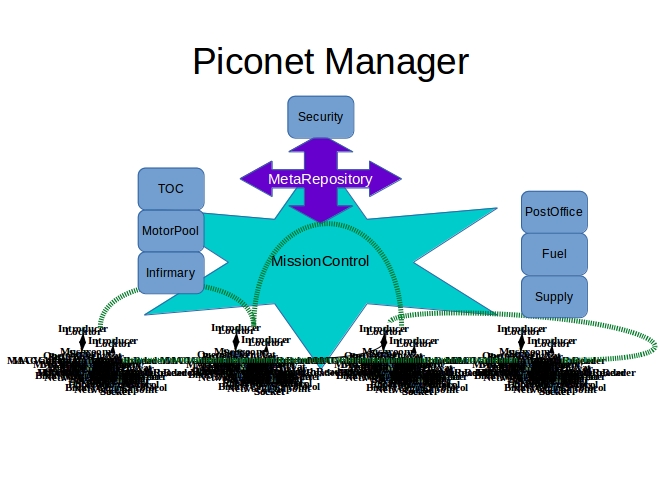
I had a few further thoughts... Now that governments cannot control the flow of information, they no longer have the initiative and are completely responsive and reactive in their modus operandi. This is due to the political forces that modern styles of communication allow to emerge. These forces mold opinion and they influence activities, in many realms. Sovereignty is defined as able to have claim, capacity and control, or dominion, agency and possession. They, governments and their adjuncts, have lost control. They have lost possession due to the limited capacity their model represents in comparison. Modern communications and swarm activities have control. The internet has control and possession. Without control, or possession, the three foundations upon which the definition of Sovereignty lay is demolished. The foundations of the Peace of Westphalia are destroyed. We must fall back to the Peace of Augsburg and the Sovereignty of City-States. Die Stadt Uber Alles! My question to you is what role do you envision Pharo playing in modern communications, which controls the fate of Nation-States as they devolve into City-States. A suggestion: Operations Management. Thus the self-replicating Piconet Manager... best, robert Piconet Manager On 12/21/2015 11:20 AM, Robert Withers wrote:
On 12/21/2015 10:17 AM, Denis Kudriashov wrote:
2015-12-21 11:19 GMT+01:00 Robert Withers <robert.w.withers@gmail.com <mailto:robert.w.withers@gmail.com>>:
governments cannot crack it.
Why it is disadvantage?
Governments stay in power, or exercise collective sovereignty, through dominion, agency and possession. Loss of control over information, and by extension currency, affects possession, or having control. They still have dominion and agency, but without three legs you can build no stool to sit upon. If loss of control over information and currency undermines possession, then the concept of the modern nation-state is undermined. I view this as a negative.
-- . .. ... ^,^ robert Go Panthers!
-- . .. ... ^,^ robert Go Panthers!
Out of curiosity and to make a point, where are you from, Denis? Where do you live now? Many from different lands, closer to each other than eah to our own governments. Trending into the future, transnational connections will deviate from their (governments') norm. On 12/21/2015 10:17 AM, Denis Kudriashov wrote:
2015-12-21 11:19 GMT+01:00 Robert Withers <robert.w.withers@gmail.com <mailto:robert.w.withers@gmail.com>>:
governments cannot crack it.
Why it is disadvantage?
-- . .. ... ^,^ robert Go Panthers!
Out of curiosity and to make a point, where are you from, Denis? Where do you live now? Many from different lands, closer to each other than eah to our own governments. Trending into the future, transnational connections will deviate from their (governments') norm. On 12/21/2015 10:17 AM, Denis Kudriashov wrote:
2015-12-21 11:19 GMT+01:00 Robert Withers <robert.w.withers@gmail.com <mailto:robert.w.withers@gmail.com>>:
governments cannot crack it.
Why it is disadvantage?
-- . .. ... ^,^ robert Go Panthers!
I'm from Russia. Now I work in Rmod team and live in France. But let's talk here about Pharo. 2015-12-21 18:03 GMT+01:00 Robert Withers <robert.w.withers@gmail.com>:
Out of curiosity and to make a point, where are you from, Denis? Where do you live now? Many from different lands, closer to each other than eah to our own governments. Trending into the future, transnational connections will deviate from their (governments') norm.
On 12/21/2015 10:17 AM, Denis Kudriashov wrote:
2015-12-21 11:19 GMT+01:00 Robert Withers <robert.w.withers@gmail.com>:
governments cannot crack it.
Why it is disadvantage?
-- . .. ... ^,^ robert Go Panthers!
Well, your countries have been intricately connected, and once again north of Sykes-Picot. Kak dela? Karosho. I'm more Germany/Egypt connected. What are you and the RMOD team doing, I am curious? Ok, I don't mean to drag us to politics, nor religion. I was making a point that connects Pharo to 21st century computing which will challenge governments, so it is related. Yet, I'll keep it on slack #randomrandom! ;-) cheers, robert On 12/21/2015 12:49 PM, Denis Kudriashov wrote:
I'm from Russia. Now I work in Rmod team and live in France. But let's talk here about Pharo.
2015-12-21 18:03 GMT+01:00 Robert Withers <robert.w.withers@gmail.com <mailto:robert.w.withers@gmail.com>>:
Out of curiosity and to make a point, where are you from, Denis? Where do you live now? Many from different lands, closer to each other than eah to our own governments. Trending into the future, transnational connections will deviate from their (governments') norm.
On 12/21/2015 10:17 AM, Denis Kudriashov wrote:
2015-12-21 11:19 GMT+01:00 Robert Withers <robert.w.withers@gmail.com <mailto:robert.w.withers@gmail.com>>:
governments cannot crack it.
Why it is disadvantage?
-- . .. ... ^,^ robert Go Panthers!
-- . .. ... ^,^ robert Go Panthers!
On 12/21/2015 03:31 PM, Denis Kudriashov wrote:
2015-12-21 19:07 GMT+01:00 Robert Withers <robert.w.withers@gmail.com <mailto:robert.w.withers@gmail.com>>:
What are you and the RMOD team doing, I am curious?
RMOD is research team at INRIA university. We develop Pharo.
Yes, absolutely! I did not know it but I am glad to hear it. RMOD is the Pharo team. You all keep going for excellence, every day. robert -- . .. ... ^,^ robert Go Panthers!

On 21 Dec 2015, at 20:55, Robert Withers <robert.w.withers@gmail.com> wrote:
On 12/21/2015 03:31 PM, Denis Kudriashov wrote:
2015-12-21 19:07 GMT+01:00 Robert Withers <robert.w.withers@gmail.com <mailto:robert.w.withers@gmail.com>>: What are you and the RMOD team doing, I am curious?
RMOD is research team at INRIA university. We develop Pharo.
Yes, absolutely! I did not know it but I am glad to hear it. RMOD is the Pharo team. You all keep going for excellence, every day.
No it is not :) the "Pharo teamâ includes many people outside RMoD: - Sven - Doru and the glamour team (Andrei, Alexei and others I do not remember their names, sorry⦠they work undercover) - Alain - People doing things in Lugano (like Yuri, who now is going to Bern)⦠Tommasso, etc. - Or course Eliot who works on the VM (not just for Pharo). - And we also consider as part of the âpharo teamâ: Nicolai (Hess), Sean and people who contributes a lot: Thierry, Norbert, Torsten (even if he probably does not know we consider him part of the team :P), etc., etc., etc. - Essentially, if you contribute in any way with Pharo and you participate on discussions, etc., you can consider yourself part of the Pharo team :) Of course in the RMOD team there are people doing and contributing to Pharo (but they do other things too, like Moose and even things nobody ever sees)⦠Pharo is a much more complex and human-sparse project :) cheers! Esteban
robert -- . .. ... ^,^ robert Go Panthers!
On 22 Dec 2015, at 19:30, Esteban Lorenzano <estebanlm@gmail.com> wrote:
On 21 Dec 2015, at 20:55, Robert Withers <robert.w.withers@gmail.com> wrote:
On 12/21/2015 03:31 PM, Denis Kudriashov wrote:
2015-12-21 19:07 GMT+01:00 Robert Withers <robert.w.withers@gmail.com>: What are you and the RMOD team doing, I am curious?
RMOD is research team at INRIA university. We develop Pharo.
Yes, absolutely! I did not know it but I am glad to hear it. RMOD is the Pharo team. You all keep going for excellence, every day.
No it is not :) the "Pharo teamâ includes many people outside RMoD:
- Sven - Doru and the glamour team (Andrei, Alexei and others I do not remember their names, sorry⦠they work undercover) - Alain - People doing things in Lugano (like Yuri, who now is going to Bern)⦠Tommasso, etc. - Or course Eliot who works on the VM (not just for Pharo). - And we also consider as part of the âpharo teamâ: Nicolai (Hess), Sean and people who contributes a lot: Thierry, Norbert, Torsten (even if he probably does not know we consider him part of the team :P), etc., etc., etc. - Essentially, if you contribute in any way with Pharo and you participate on discussions, etc., you can consider yourself part of the Pharo team :)
Of course in the RMOD team there are people doing and contributing to Pharo (but they do other things too, like Moose and even things nobody ever sees)⦠Pharo is a much more complex and human-sparse project :)
Well said: Pharo is the result of a continuous effort of a large group of people. INRIA/RMOD is like the backbone. It is dangerous to list names, because you always forget people. Like you did, but I am not going to try to correct you, because I will forget many people as well. Every contribution: asking questions, entering in conversations, answering questions, helping others, writing blog posts and articles, reporting bugs, writing documentation, fixing bugs, it all counts, it all helps, a lot.
cheers! Esteban
robert -- . .. ... ^,^ robert Go Panthers!
yeah, Iâm aware of that but I wanted to express what we feel about being âpharo teamâ and I thought naming people (even if, of course, is far from exhaustive) was more explicit. cheers, Esteban
On 22 Dec 2015, at 19:28, Sven Van Caekenberghe <sven@stfx.eu> wrote:
On 22 Dec 2015, at 19:30, Esteban Lorenzano <estebanlm@gmail.com> wrote:
On 21 Dec 2015, at 20:55, Robert Withers <robert.w.withers@gmail.com> wrote:
On 12/21/2015 03:31 PM, Denis Kudriashov wrote:
2015-12-21 19:07 GMT+01:00 Robert Withers <robert.w.withers@gmail.com>: What are you and the RMOD team doing, I am curious?
RMOD is research team at INRIA university. We develop Pharo.
Yes, absolutely! I did not know it but I am glad to hear it. RMOD is the Pharo team. You all keep going for excellence, every day.
No it is not :) the "Pharo teamâ includes many people outside RMoD:
- Sven - Doru and the glamour team (Andrei, Alexei and others I do not remember their names, sorry⦠they work undercover) - Alain - People doing things in Lugano (like Yuri, who now is going to Bern)⦠Tommasso, etc. - Or course Eliot who works on the VM (not just for Pharo). - And we also consider as part of the âpharo teamâ: Nicolai (Hess), Sean and people who contributes a lot: Thierry, Norbert, Torsten (even if he probably does not know we consider him part of the team :P), etc., etc., etc. - Essentially, if you contribute in any way with Pharo and you participate on discussions, etc., you can consider yourself part of the Pharo team :)
Of course in the RMOD team there are people doing and contributing to Pharo (but they do other things too, like Moose and even things nobody ever sees)⦠Pharo is a much more complex and human-sparse project :)
Well said: Pharo is the result of a continuous effort of a large group of people. INRIA/RMOD is like the backbone.
It is dangerous to list names, because you always forget people. Like you did, but I am not going to try to correct you, because I will forget many people as well.
Every contribution: asking questions, entering in conversations, answering questions, helping others, writing blog posts and articles, reporting bugs, writing documentation, fixing bugs, it all counts, it all helps, a lot.
cheers! Esteban
robert -- . .. ... ^,^ robert Go Panthers!
Hi Esteban, I guess it sounded to me RMoD is the backbone team. :) I think you are into the VM, right? Is there any chance you could build the pharo5.0 crypto plugins for me on 32bit Ubuntu? l I am unable to build myself right now. The package CryptographyPlugins on the Cryptography squeak source has them. This would really help me. thank you, Robert On 12/22/2015 01:30 PM, Esteban Lorenzano wrote:
On 21 Dec 2015, at 20:55, Robert Withers <robert.w.withers@gmail.com <mailto:robert.w.withers@gmail.com>> wrote:
On 12/21/2015 03:31 PM, Denis Kudriashov wrote:
2015-12-21 19:07 GMT+01:00 Robert Withers <robert.w.withers@gmail.com <mailto:robert.w.withers@gmail.com>>:
What are you and the RMOD team doing, I am curious?
RMOD is research team at INRIA university. We develop Pharo.
Yes, absolutely! I did not know it but I am glad to hear it. RMOD is the Pharo team. You all keep going for excellence, every day.
No it is not :) the "Pharo teamâ includes many people outside RMoD:
- Sven - Doru and the glamour team (Andrei, Alexei and others I do not remember their names, sorry⦠they work undercover) - Alain - People doing things in Lugano (like Yuri, who now is going to Bern)⦠Tommasso, etc. - Or course Eliot who works on the VM (not just for Pharo). - And we also consider as part of the âpharo teamâ: Nicolai (Hess), Sean and people who contributes a lot: Thierry, Norbert, Torsten (even if he probably does not know we consider him part of the team :P), etc., etc., etc. - Essentially, if you contribute in any way with Pharo and you participate on discussions, etc., you can consider yourself part of the Pharo team :)
Of course in the RMOD team there are people doing and contributing to Pharo (but they do other things too, like Moose and even things nobody ever sees)⦠Pharo is a much more complex and human-sparse project :)
cheers! Esteban
robert -- . .. ... ^,^ robert Go Panthers!
-- . .. ... ^,^ robert Go Panthers!
On 22 Dec 2015, at 19:45, Robert Withers <robert.w.withers@gmail.com> wrote:
Hi Esteban,
I guess it sounded to me RMoD is the backbone team. :)
I think you are into the VM, right? Is there any chance you could build the pharo5.0 crypto plugins for me on 32bit Ubuntu? l I am unable to build myself right now. The package CryptographyPlugins on the Cryptography squeak source has them. This would really help me.
I am the overseer (like that guy in Fallout Shelter) ;) No, really: Iâm a bit over everything and step into things when they need more time than the one people can usually invest in their free time. Now is VM :) About your plugins: they are in my TODO list. They will be eventually, but I cannot tell you exactly when (hopefully, soon (â¢)) :) cheers! Esteban
thank you, Robert
On 12/22/2015 01:30 PM, Esteban Lorenzano wrote:
On 21 Dec 2015, at 20:55, Robert Withers < <mailto:robert.w.withers@gmail.com>robert.w.withers@gmail.com <mailto:robert.w.withers@gmail.com>> wrote:
On 12/21/2015 03:31 PM, Denis Kudriashov wrote:
2015-12-21 19:07 GMT+01:00 Robert Withers <robert.w.withers@gmail.com <mailto:robert.w.withers@gmail.com>>: What are you and the RMOD team doing, I am curious?
RMOD is research team at INRIA university. We develop Pharo.
Yes, absolutely! I did not know it but I am glad to hear it. RMOD is the Pharo team. You all keep going for excellence, every day.
No it is not :) the "Pharo teamâ includes many people outside RMoD:
- Sven - Doru and the glamour team (Andrei, Alexei and others I do not remember their names, sorry⦠they work undercover) - Alain - People doing things in Lugano (like Yuri, who now is going to Bern)⦠Tommasso, etc. - Or course Eliot who works on the VM (not just for Pharo). - And we also consider as part of the âpharo teamâ: Nicolai (Hess), Sean and people who contributes a lot: Thierry, Norbert, Torsten (even if he probably does not know we consider him part of the team :P), etc., etc., etc. - Essentially, if you contribute in any way with Pharo and you participate on discussions, etc., you can consider yourself part of the Pharo team :)
Of course in the RMOD team there are people doing and contributing to Pharo (but they do other things too, like Moose and even things nobody ever sees)⦠Pharo is a much more complex and human-sparse project :)
cheers! Esteban
robert -- . .. ... ^,^ robert Go Panthers!
-- . .. ... ^,^ robert Go Panthers!
On 12/22/2015 03:12 PM, Esteban Lorenzano wrote:
On 22 Dec 2015, at 19:45, Robert Withers <robert.w.withers@gmail.com <mailto:robert.w.withers@gmail.com>> wrote:
Hi Esteban,
I guess it sounded to me RMoD is the backbone team. :)
I think you are into the VM, right? Is there any chance you could build the pharo5.0 crypto plugins for me on 32bit Ubuntu? l I am unable to build myself right now. The package CryptographyPlugins on the Cryptography squeak source has them. This would really help me.
I am the overseer (like that guy in Fallout Shelter) ;)
Not sure but I can relate!
No, really: Iâm a bit over everything and step into things when they need more time than the one people can usually invest in their free time. Now is VM :)
And you are super busy with Spr, which I am looking forward to getting on my machine!
About your plugins: they are in my TODO list. They will be eventually, but I cannot tell you exactly when (hopefully, soon (â¢)) :)
I liek eventually and have a great holidays. We've plenty of time and it is all temporary. On reflection, what I would really and truly love is for Crypto and SecureSession, image code and plugins and tests all become a part of your CI. That is what I would really want for Christmas! ;) Thanks to everyone who is a part of being great! best, robert
cheers! Esteban
thank you, Robert
On 12/22/2015 01:30 PM, Esteban Lorenzano wrote:
On 21 Dec 2015, at 20:55, Robert Withers <robert.w.withers@gmail.com> wrote:
On 12/21/2015 03:31 PM, Denis Kudriashov wrote:
2015-12-21 19:07 GMT+01:00 Robert Withers <robert.w.withers@gmail.com <mailto:robert.w.withers@gmail.com>>:
What are you and the RMOD team doing, I am curious?
RMOD is research team at INRIA university. We develop Pharo.
Yes, absolutely! I did not know it but I am glad to hear it. RMOD is the Pharo team. You all keep going for excellence, every day.
No it is not :) the "Pharo teamâ includes many people outside RMoD:
- Sven - Doru and the glamour team (Andrei, Alexei and others I do not remember their names, sorry⦠they work undercover) - Alain - People doing things in Lugano (like Yuri, who now is going to Bern)⦠Tommasso, etc. - Or course Eliot who works on the VM (not just for Pharo). - And we also consider as part of the âpharo teamâ: Nicolai (Hess), Sean and people who contributes a lot: Thierry, Norbert, Torsten (even if he probably does not know we consider him part of the team :P), etc., etc., etc. - Essentially, if you contribute in any way with Pharo and you participate on discussions, etc., you can consider yourself part of the Pharo team :)
Of course in the RMOD team there are people doing and contributing to Pharo (but they do other things too, like Moose and even things nobody ever sees)⦠Pharo is a much more complex and human-sparse project :)
cheers! Esteban
robert -- . .. ... ^,^ robert Go Panthers!
-- . .. ... ^,^ robert Go Panthers!
-- . .. ... ^,^ robert Go Panthers!

Love to read that! On Mon, Dec 21, 2015 at 10:30 AM, Denis Kudriashov <dionisiydk@gmail.com> wrote:
Hello
2015-12-20 19:54 GMT+01:00 Mariano Martinez Peck <marianopeck@gmail.com>:
That being said, I of course like the idea of distributing processing across multiple images. No wonder, my PhD tool (Marea) and related sub-projects (Fuel, Ghost proxies, etc) have something to do with the mentioned topic. Dave already mentioned about RemoteTask, which was something I was about to mention. There is also Seamless project (now used by Remote Debugger stuff) and quite other tools. Finally, I think this project may have a big percentage that could be considered as "research". So having a PhD / master student working on this would also be nice. In fact, maybe Denis Kudriashov might work on that topic??? (he is now in RMOD team).
Yes. This is what I'm doing now. At last weeks of this year I plan to finish my improvements to Seamless. Then I will adapt system and tools for remote usage. Main goal is allow work with remote images same way we work locally: remote debugging, browsing, any kind of system navigation, editing code.

Le 19/12/15 14:33, Dimitris Chloupis a écrit :
I am very excited for such a project.
I hope you manage to fix the stdout problem on macos.
One thing I would like to see is an expansion of the ability of OSProcess to launch multiple instances of pharo and make them communicate with each other. Thats a way to have pharo running on multiple cores. Maybe establish a framework of communication of images that will be based on the existing design of the fork mechanism in Pharo.
Python is doing something similar with multiprocessing module which launches multiple processes of cpython executable and makes them communication with each other through a similar api to its threading module. This way python takes advantage of multiple cores. Python threads like pharo are green threads and pharo like python has a GIL like mechanism.
this will be probably another project. Stef
Taking into account that current computers have at least 4 cores, its not a bad idea to speed up pharo like this at least 400% ;)
On Sat, Dec 19, 2015 at 3:24 PM Mariano Martinez Peck <marianopeck@gmail.com <mailto:marianopeck@gmail.com>> wrote:
Dear all,
I am tremendously happy to announce you that Pharo Consortium will sponsor yet another development effort. In this particular case, it's my honor to carry on such an effort and I will be developing and improving a few things and ideas. All the contract and paperwork has already been done so it's time to start working.
Regarding the developments itself, we discussed about these topics:
1) Experiment with a simpler yet more limited OSProcess alternative to execute OS commands. 2) Improving FileSystem in order to better deal with some POSIX stuff like symbolic links, unix file permissions, etc etc.
I have already started with 1). OSProcess is super complete and it involves some packages (OSProcess / CommandShell) as well as some VM plugins (OSProcessPlugin, AIOPlugin). OSProcess provides lots of features (like forking the running image) but we would like to focus only in executing OS commands. In addition, OSProcess dates from quite some years ago when many of the current infrastructure features did not exist yet.
So the idea is to think a simpler alternative to execute OS commands, using new features such as threaded FFI (for example, for reading async from pipes), pinned objects, etc. We want to use FFI as much as possible rather than VM plugins.
From the image side, we are thinking about an API which would look like a builder-like API (FileSystem, XStream, etc).
We have been discussing with David Lewis (OSProcess author) as well as with Eliot Miranda, Esteban Lorenzano, Damien Pollet, Stephane Ducasse, etc in order to agree in a project that would be worth doing (otherwise we would continue using existing tools). And they have all been very kind with me providing positive discussions.
I will soon do a survey to measure the most common use cases of OSProcess and related tools.
If you have any thought, question, feedback, or whatever, please let us know.
Finally, note that I will be doing this project together with another client's project (Quuve) and my life does not have much free time these days...so please be patient!!!
Best,
-- Mariano http://marianopeck.wordpress.com
On 12/21/2015 01:34 PM, stepharo wrote:
Le 19/12/15 14:33, Dimitris Chloupis a écrit :
I am very excited for such a project.
I hope you manage to fix the stdout problem on macos.
One thing I would like to see is an expansion of the ability of OSProcess to launch multiple instances of pharo and make them communicate with each other. Thats a way to have pharo running on multiple cores. Maybe establish a framework of communication of images that will be based on the existing design of the fork mechanism in Pharo.
Python is doing something similar with multiprocessing module which launches multiple processes of cpython executable and makes them communication with each other through a similar api to its threading module. This way python takes advantage of multiple cores. Python threads like pharo are green threads and pharo like python has a GIL like mechanism.
this will be probably another project.
Well, if you take Seamless or SecureSession and conenct 4 VMs together and stretch the heap safely, what's the difference? You can crash one of them and NOT affect the others, so it's all good. robert
Stef
Taking into account that current computers have at least 4 cores, its not a bad idea to speed up pharo like this at least 400% ;)
On Sat, Dec 19, 2015 at 3:24 PM Mariano Martinez Peck <marianopeck@gmail.com <mailto:marianopeck@gmail.com>> wrote:
Dear all,
I am tremendously happy to announce you that Pharo Consortium will sponsor yet another development effort. In this particular case, it's my honor to carry on such an effort and I will be developing and improving a few things and ideas. All the contract and paperwork has already been done so it's time to start working.
Regarding the developments itself, we discussed about these topics:
1) Experiment with a simpler yet more limited OSProcess alternative to execute OS commands. 2) Improving FileSystem in order to better deal with some POSIX stuff like symbolic links, unix file permissions, etc etc.
I have already started with 1). OSProcess is super complete and it involves some packages (OSProcess / CommandShell) as well as some VM plugins (OSProcessPlugin, AIOPlugin). OSProcess provides lots of features (like forking the running image) but we would like to focus only in executing OS commands. In addition, OSProcess dates from quite some years ago when many of the current infrastructure features did not exist yet.
So the idea is to think a simpler alternative to execute OS commands, using new features such as threaded FFI (for example, for reading async from pipes), pinned objects, etc. We want to use FFI as much as possible rather than VM plugins.
From the image side, we are thinking about an API which would look like a builder-like API (FileSystem, XStream, etc).
We have been discussing with David Lewis (OSProcess author) as well as with Eliot Miranda, Esteban Lorenzano, Damien Pollet, Stephane Ducasse, etc in order to agree in a project that would be worth doing (otherwise we would continue using existing tools). And they have all been very kind with me providing positive discussions.
I will soon do a survey to measure the most common use cases of OSProcess and related tools.
If you have any thought, question, feedback, or whatever, please let us know.
Finally, note that I will be doing this project together with another client's project (Quuve) and my life does not have much free time these days...so please be patient!!!
Best,
-- Mariano http://marianopeck.wordpress.com
-- . .. ... ^,^ robert Go Panthers!

participants (13)
-
 Ben Coman
 -
 David T. Lewis
 -
 Denis Kudriashov
 -
 Dimitris Chloupis
 -
 Esteban Lorenzano
 -
 Mariano Martinez Peck
 -
 phil@highoctane.be
 -
 Pierce Ng
 -
 Robert Withers
 -
 stepharo
 -
 Sven Van Caekenberghe
 -
 Thierry Goubier
 -
 Torsten Bergmann